




Gas Leak Detection & Gas Line Repair in DFW
Licensed plumbers who find the leak, fix it properly and prove it’s fixed.
A faint smell of gas near the stove, a hiss behind the water heater, a patch of dead grass in a line across the yard: gas leaks rarely announce themselves loudly, and they don’t get better on their own. CR Plumbing, Air & Electric finds and repairs gas leaks and damaged gas lines for homes and businesses across Fort Worth, North Richland Hills, Grapevine, Euless, Hurst, Southlake, Denton, Flower Mound and Argyle. Every repair is done by a licensed plumber, pressure-tested before the gas goes back on, and inspected where your city requires it.

Licensed Gas Plumbers
In Texas, gas piping is plumbing work. Every leak repair is done by a licensed plumber.
Leak Detection That Finds the Source
Electronic gas detectors, pressure testing and bubble testing at every fitting, so we fix the leak, not the area around it.
Emergency Repairs Available
A gas leak can’t wait for a convenient day. We move gas calls to the front of the line.
Repair or Full Line Replacement
We repair damaged sections and replace lines that are too far gone, then pressure-test the whole system.
If You Smell Gas Right Now
Natural gas has no smell of its own. Utilities add a chemical called mercaptan so a leak smells like rotten eggs or sulfur. If you notice that smell:
- Get everyone out of the house, pets included. Leave the door open behind you.
- Don’t create a spark. Don’t switch lights or appliances on or off, don’t use the garage door opener, and don’t light anything.
- Don’t try to find the leak yourself.
- From a safe distance, call 911 and Atmos Energy at 866-322-8667. Atmos will check the leak and, if needed, shut off the gas at the meter.
- Call us for the repair. Once the gas is off and the house is safe, we find the leak, fix it and run the pressure test the utility needs before turning the gas back on.
Signs of a Gas Leak
The smell is the obvious one, but there are others:
- A rotten-egg or sulfur smell indoors, near an appliance, or outside near the meter
- A hissing or whistling sound near a gas line, valve or appliance
- Dead or yellowing grass or plants in a strip across the yard, over a buried line
- Bubbles in standing water or mud where a gas line runs underground
- A gas bill that jumps without any change in how you use your appliances
- A stove burner or pilot that won’t stay lit, or a flame that burns yellow and lazy instead of blue
A carbon monoxide alarm doesn’t detect natural gas. They’re different gases, and you need both a CO alarm and, ideally, a separate natural gas alarm near gas appliances.
Gas Leak Detection
Finding a gas leak is mostly about narrowing it down without tearing anything open. We use three methods together:
- Pressure testing. We isolate the system and watch a gauge. If the pressure drops, there’s a leak, and testing one section at a time tells us which run it’s on.
- Electronic gas detectors. A handheld detector picks up gas at the fittings, valves and connectors where leaks usually start.
- Bubble testing. A leak-detection solution on a suspect joint bubbles if gas is escaping, which confirms the exact spot.
Most leaks we find are at the same handful of places: the flexible connector behind a stove, dryer or water heater, a shutoff valve, a threaded joint in the attic, the meter riser outside, or a buried line running to a detached garage, pool heater or outdoor kitchen. We also check for water leaks in the same visit if you need it. See water leak detection.
Leak Detection
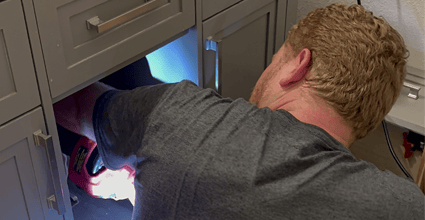
Pressure testing, electronic detectors and bubble testing to find the exact source before anything is opened up.
Gas Line Repair
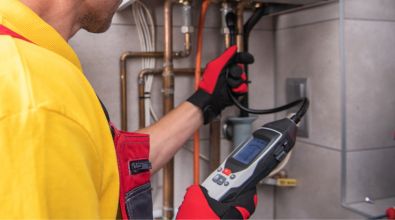
Damaged, corroded and leaking gas lines repaired with new pipe and fittings, permitted where required and pressure-tested.
Line Replacements
Line Replacements
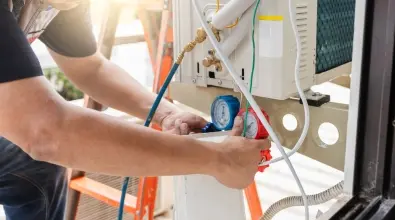
When a line is corroded or damaged beyond repair, we replace the run with new code-approved pipe.
Gas Line Repair
Not every gas line problem is an active leak yet. These are the repairs we do most:
- Corroded steel pipe underground. Older buried lines, especially runs to a detached garage, pool heater or workshop, corrode from the outside and start to seep.
- Lines damaged during other work. A nail through a line during a remodel, or a shovel, auger or fence post hitting a buried line.
- Fittings that loosen over time. North Texas clay soil swells and shrinks, and the house shifts with it. Threaded joints can work loose.
- Old valves and connectors. Older flexible connectors and stiff, corroded shutoff valves are some of the most common leak points in any house.
We cut out the damaged section, replace it with new pipe and fittings, and pressure-test the system before the gas goes back on. When a buried steel line has corroded in more than one place, replacing the whole run with polyethylene is usually cheaper than patching it again and again. For a brand new line or a full system upgrade, see gas line installation.
Gas leaks at appliances
A lot of leaks are at the appliance itself: the connector or valve behind a gas stove, the water heater’s gas control, a furnace’s gas valve, a dryer hookup or a fireplace key valve. We repair the connection and check the appliance is burning correctly. If the appliance needs a new hookup, see gas stove and appliance installation.
Getting Your Gas Turned Back On
If Atmos Energy shut off your gas at the meter because of a leak or a failed test, it typically won’t be turned back on until the leak is repaired and the system passes a pressure test, and in many cities a city inspection as well. We make the repair, run the test and book the inspection, so you’re without heat, hot water and a working stove for as little time as possible. Once everything passes, Atmos turns the gas back on and relights the pilots.
How Much Does Gas Leak Repair Cost?
Job | Typical cost |
Leak at a fitting or connector behind an appliance | $120 to $250 |
Leak hidden in a wall or attic | About $300 to $925, plus any drywall repair |
Leak on a buried line | Adds $1,500 to $5,000, depending on depth and length |
Replacing a damaged section of line | $23 to $35 per foot |
Yearly gas line inspection | $50 to $75 |
What moves the price: where the leak is, how hard it is to reach, whether pipe needs replacing, and whether a permit and inspection are required. You get the price before any repair starts.
Gas Leak Repair Near You
We find and repair gas leaks across Fort Worth, North Richland Hills, Haltom City, Grapevine, Euless, Hurst, Bedford, Southlake, Keller, Denton, Lewisville, Flower Mound and Argyle.
Frequently Asked Questions
How can I tell if I have a gas leak?
The most common sign is a rotten-egg smell. Others are a hissing sound near a gas line or appliance, dead grass in a strip over a buried line, bubbles in standing water, or a gas bill that jumps for no reason.
What should I do if I smell gas inside my house?
Get everyone out, don’t switch anything on or off, and from a safe distance call 911 and Atmos Energy at 866-322-8667. Once the house is safe, call us for the repair.
How do you perform gas leak testing?
We pressure-test the system to confirm a leak and narrow down which section it’s on, then use an electronic gas detector and a bubble solution to pinpoint the exact fitting or spot.
How long does it take to fix a gas leak?
A leak at a connector or valve is usually fixed in an hour or two. Leaks inside walls or on buried lines take longer, often most of a day. If the gas was shut off at the meter, allow time for the pressure test, any city inspection and the utility to turn it back on.
Do you repair gas lines or replace them?
Both. A single damaged fitting or section gets repaired. A buried steel line that has corroded in several places is usually cheaper to replace than to keep patching.
Can you repair gas leaks in appliances?
Yes. We repair leaks at the connectors and valves on stoves, water heaters, furnaces, dryers and fireplaces, and check the appliance is burning safely afterwards.
Are gas leak repairs required to pass inspection?
Often, yes. If the gas was shut off or pipe was replaced, many cities require a pressure test and an inspection before the gas can be turned back on. We handle the test and book the inspection.
Will my carbon monoxide detector warn me about a gas leak?
No. Carbon monoxide and natural gas are different gases. Keep a CO alarm on every floor and consider a separate natural gas alarm near gas appliances.
Which company handles both water and gas leak detection in DFW?
CR Plumbing, Air & Electric does both. We find gas leaks with pressure testing and electronic detectors, and water leaks with acoustic and pressure testing, so one visit can cover both. See water leak detection.
Do you provide gas leak repair for homes and businesses?
Yes, for homes, restaurants, offices and retail spaces across DFW.
How it Works
Leak Assessment
We confirm the leak with a pressure test and pinpoint it with electronic and bubble testing.
Repair or Replace
You get the price first. Then we repair the fitting or section, or replace the line if it’s too far gone.
Inspection & Safety Testing
We pressure-test the system again, book the city inspection where it’s required, and confirm the gas can safely go back on.

Flower Mound
3121 Cross Timbers Rd #11 Flower Mound, TX 75028
North Richland Hills
4925 Davis Blvd Suite 201 North Richland Hills, TX 76137
Richland Hills
3113 Elm Park St. Richland Hills, TX 76118
Argyle, TX
2231 Berniece Jones Rd. #103 Argyle, TX 76226
AREAS WE SERVE
- Privacy Policy
- Terms of Services
- Sitemap