




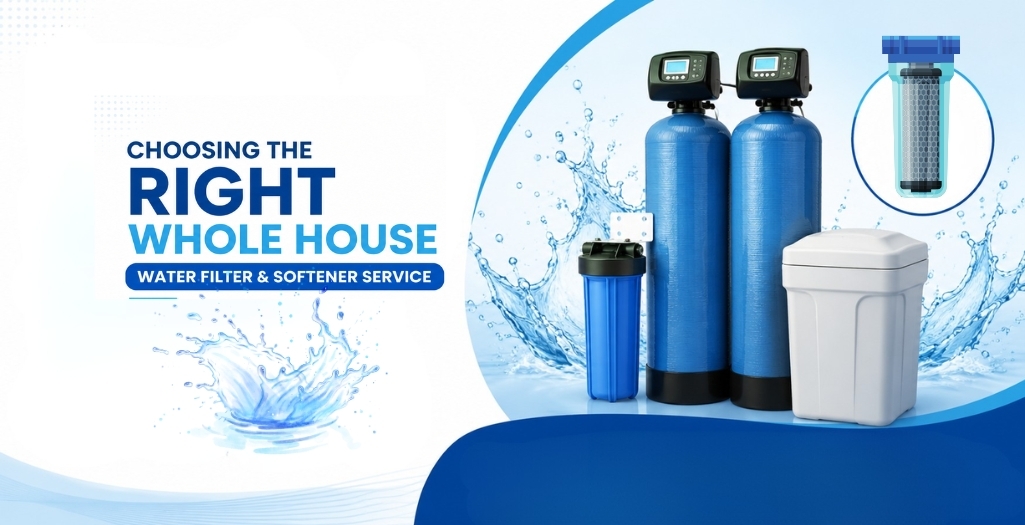
Tips to Choose Right Whole House Water Filter & Softener
Clean, safe water is essential for every household, but not all water treatment systems solve the same problems. Hard water can leave mineral buildup on fixtures and appliances, while contaminants such as chlorine, sediment, and other impurities can affect water quality throughout your home. Choosing the right whole house water filter and softener service ensures you get a customized solution that addresses your specific water concerns. From improving water taste and protecting plumbing to extending the lifespan of appliances, the right system can make a significant difference in your home’s comfort, efficiency, and long-term maintenance costs.
A whole house water filter and softener system is not a purchase you’ll make twice — not if you make the right choice the first time. The process starts with accurate water testing, moves through selecting the system that fits your chemistry and household size, and culminates with professional water filtration installation by a licensed, experienced contractor who stands behind their work.
Hard water affects more than 85% of U.S. homes. In areas with hardness above 7 GPG, untreated water leads to shortened appliance lifespans, scale-coated pipes, elevated energy bills, and daily frustration. A properly installed whole house water softener eliminates all of that — delivering returns on investment that accumulate every single month.
Why the Right System and the Right Service Matter
Most homeowners focus entirely on the equipment when shopping for a whole house water softener. The brand, the grain capacity, and the price are all important factors. But the service behind the installation matters just as much. A poorly installed system, regardless of how premium the equipment is, can leak, fail to soften effectively, or cause a drop in water pressure throughout your home.
The two decisions, choosing the right water softener system and choosing the right installation service, are inseparable. This guide addresses both.

Step 1: Start With a Professional Water Quality Check
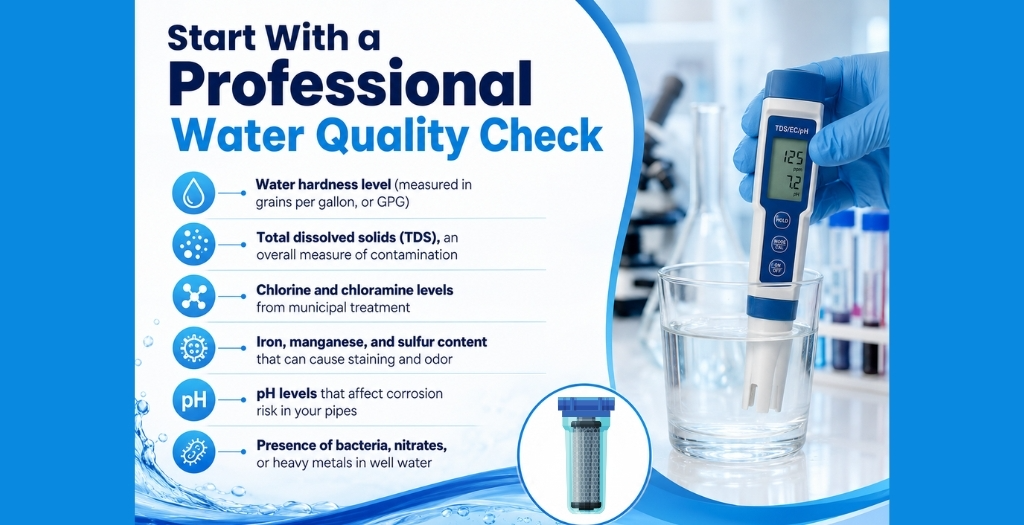
Before you compare systems or request quotes, the first step is always a water quality check. This test reveals:
- Water hardness level (measured in grains per gallon, or GPG)
- Total dissolved solids (TDS), an overall measure of contamination
- Chlorine and chlorine levels from municipal treatment
- Iron, manganese, and sulfur content that can cause staining and odor
- pH levels that affect corrosion risk in your pipes
- Presence of bacteria, nitrates, or heavy metals in well water
Understanding your water chemistry is what separates a smart system purchase from an expensive guessing game. Many licensed plumbers, including CR Plumbing, Air and Electric, offer water quality check services before recommending any equipment.
Step 2: Understand Your System Options
Not all whole house water filter and softener systems are created equal. Here’s a breakdown of the main types and what each one is best suited for:
Salt-Based Ion Exchange Softeners
The most widely used and proven technology. Salt-based systems remove calcium and magnesium through ion exchange, replacing hardness minerals with sodium. They are highly effective for water hardness above 7 GPG and represent the core of most whole house water softener setups.
Best for: Homes with hard or very hard water who want the most thorough hardness removal available.
Salt-Free Water Conditioners
These systems don’t remove hardness minerals; they alter their structure so they can’t bond to surfaces and form scale. Lower maintenance (no salt to replenish), but less effective in areas with extreme hardness. Not a true softener by technical definition, but increasingly popular for eco-conscious homeowners.
Best for: Homes with moderately hard water (3.5–10 GPG)
Whole House Water Filter and Softener Combos
The most comprehensive option. A whole house water filter and softener combo combines a multi-stage filtration system (targeting chlorine, sediment, VOCs, heavy metals) with a salt-based or salt-free softener in a single unit or paired system. Every water outlet in the home receives filtered, softened water.
Best for: Homeowners who want total water quality improvement, not just hardness reduction.
Dual-Tank Softener Systems
Two resin tanks alternate during regeneration, ensuring a continuous supply of soft water, ideal for large families or homes with consistently high water use. These represent a higher upfront water softener system cost but eliminate the downtime associated with single-tank regeneration.
Best for: Households of 5+ people or properties with commercial-level water usage.
Point-of-Entry Iron Filters
When iron content is high (above 0.3 mg/L), a standard softener alone won’t cut it. Iron filters are added upstream from the softener to protect the resin bed and extend system life.
Best for: Well water users with iron staining on fixtures and laundry.
Step 3: What to Look for in a Water Softener Installation Service
When searching for water softener installation near me, the quality of the service provider determines whether your investment performs as promised. Here’s exactly what to evaluate:
Water Treatment Specialization
A contractor who specializes in water treatment systems understands proper sizing, bypass valve configuration, brine line setup, and regeneration programming. Ask specifically about their experience with the brand and system type you’re considering.
Transparent Quotes
A trustworthy contractor provides a detailed quote with no hidden costs. At CR Plumbing, Air and Electric, we provide homeowners with a free quote for all water filtration services.
Post-Installation Support
The best water softener installation near me providers don’t disappear after the job is done. This is why our company offers maintenance plans, annual service visits, and responsive support if issues arise.
CR Plumbing, Air and Electric: Expert Whole House Water Softener Services
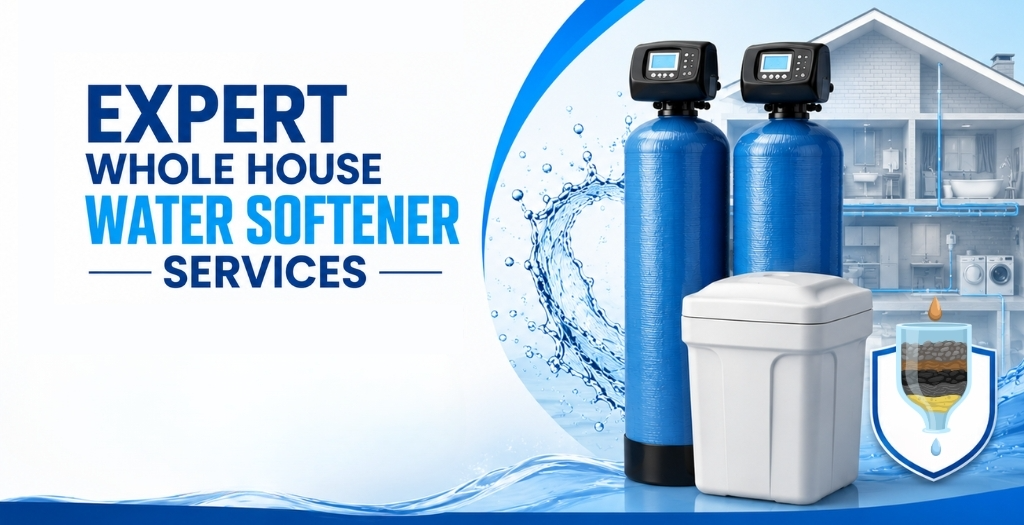
CR Plumbing, Air and Electric has built a reputation as a trusted local resource for homeowners navigating whole house water filter and softener decisions. From the initial water quality check to recommending the right water softener, we handle all aspects of water filtration installation and providing ongoing maintenance.
What sets us apart:
- Licensed, background-checked technicians with hands-on water treatment experience
- Free or low-cost water quality testing before any system is recommended
- Transparent pricing with no hidden fees or verbal-only estimates
- Installation of leading brands backed by manufacturer warranties
- Post-installation support and maintenance plans available for all customers
- Local expertise; we understand the specific water quality challenges in your area
When homeowners in our service area search for water softener installation near me, we’re the team they call because they know the job will be done correctly the first time.

FAQs
What is the first step to choosing the right whole house water filter and softener?
Always begin with a professional water quality check. Knowing your water’s hardness level (GPG), iron content, pH, and contaminant profile is the only reliable foundation for selecting the right system. Without test data, you risk buying a system that’s undersized, oversized, or simply wrong for your water chemistry.
How do I find a reliable water softener installation near me?
Search for licensed plumbing contractors in your area who specialize in water filtration installation and water treatment. Verify their license, read local reviews, and ask for an itemized written quote. Companies like CR Plumbing, Air and Electric offer comprehensive installation services with full transparency.
What’s the difference between a water filter and a water softener?
A water softener specifically targets hardness minerals (calcium and magnesium) through ion exchange. A water filter removes contaminants like chlorine, sediment, heavy metals, and bacteria. A whole house water filter and softener combo does both, treating all water at the point of entry into your home.
How long does a whole house water softener last?
A quality whole house water softener lasts 15–20 years with proper maintenance. The resin bed may need replacement every 10–15 years. Annual servicing by a licensed contractor significantly extends system performance and lifespan.
Is a salt-free conditioner the same as a water softener system?
No. A salt-free conditioner alters the structure of hardness minerals to prevent scale but does not remove them from the water. A true water softener system removes calcium and magnesium through ion exchange, producing genuinely soft water. The right choice depends on your water hardness level and household goals.
What size water softener system do I need for my home? Sizing a water softener system for home use depends on two variables: household size (people) and water hardness (GPG). A family of four with 10 GPG water typically needs a 32,000–40,000 grain system. A licensed installer should perform the calculation based on your actual water quality check results.