




Slow Draining Kitchen Sink? Signs You Need Expert Plumbers
A slow sink drain is easy to ignore at first. But that minor inconvenience is often the first signal of a deeper plumbing issue building beneath your kitchen. Left unaddressed, what starts as sluggish drainage can escalate into full blockages, pipe damage, or even water backup that damages your cabinets and flooring. Knowing when to act and when to call a professional can save you significant time and money.
Warning Signs Your Slow Kitchen Drain Needs Professional Attention
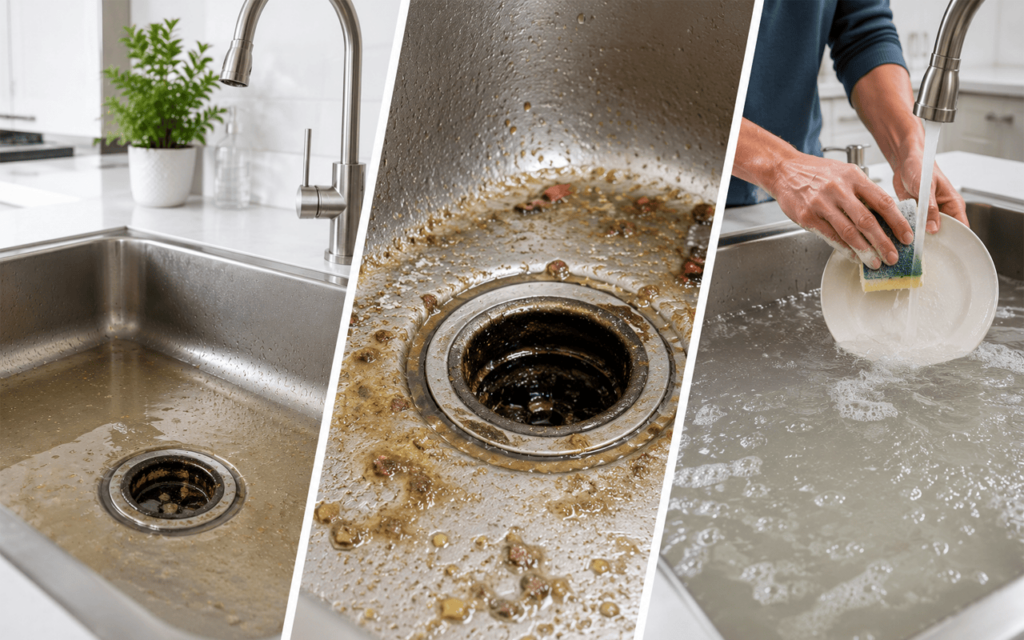
Not every slow drain requires an immediate call to a plumber. But certain signs indicate the problem has moved beyond a surface-level clog. Pay attention if you’re experiencing any of the following alongside a slow kitchen drain:
Gurgling or Bubbling Sounds
If your drain makes gurgling or bubbling noises when water flows or when the dishwasher drains, air is trapped in the line. This points to a ventilation problem or a blockage deep enough to displace air, neither of which a plunger will resolve.
Foul Odors Coming from the Drain
Persistent bad smells from the drain, even after cleaning, often indicate decomposing organic matter trapped further down the pipe. This is common in grease-coated drains where food particles have become embedded in the buildup.
Water Backing Up Into Other Fixtures
If water backs up into your dishwasher, or you notice the sink filling up when you run the garbage disposal, the clog is likely at or past the shared drain line. This is a sign of a significant blockage requiring professional attention.
The Problem Returns Quickly After DIY Treatment
If you’ve used a drain snake or chemical cleaner and the slow sink drain comes back within days or weeks, the blockage isn’t fully cleared, or there’s an underlying structural issue at play. Recurring problems need a camera inspection to diagnose accurately.
Multiple Drains Are Slow Simultaneously
When more than one fixture in the home drains slow down at the same time, the problem is almost certainly in the main sewer line, not just the kitchen. This is a plumbing emergency that needs same-day service.

What Causes a Slow Draining Kitchen Sink?
Before you can fix the problem, it helps to understand what’s causing it. Kitchen sinks are uniquely prone to buildup because of everything that goes down them daily. The most common culprits behind a slow draining kitchen sink include:
- Grease and fat buildup: Cooking oils and fats cool and solidify inside pipes, narrowing the passage over time
- Food particle accumulation: Even with a garbage disposal, small food particles collect and form blockages
- Soap scum: Dish soap residue combines with minerals in hard water to create a sticky film along pipe walls
- Foreign objects: Small utensils, food packaging pieces, or bottle caps can partially obstruct a drain
- Ventilation issues: A clogged or improperly installed vent pipe creates negative pressure, slowing drainage throughout the system
- Deeper pipe problems: Tree root intrusion, corroded pipes, or damaged drain lines can all cause persistent slow drainage that no amount of DIY effort will fix
According to the American Society of Plumbers and Pipefitters, drain clogs are among the top five most common plumbing service calls in residential homes, accounting for millions of service visits annually in the U.S. alone.
How to Fix Slow Draining Sink: What You Can Try First
For mild or early-stage slowdowns, there are several methods worth attempting before calling in a professional to fix slow draining sink issues:
Method 1: Boiling Water Flush
Pour a kettle of boiling water directly down the drain in two or three stages, allowing it to work between pours. This can dissolve grease and soap buildup effectively. Do not use this method with PVC pipes, as extreme heat can soften or warp the material.
Method 2: Baking Soda and Vinegar
- Pour half a cup of baking soda down the drain
- Follow with half a cup of white vinegar
- Cover the drain and let it fizz for 15–20 minutes
- Flush with hot water
This natural method can break down mild organic buildup without damaging your pipes or adding harsh chemicals to the water system.
Method 3: Manual Drain Snake
A hand-cranked or electric drain snake (also called an auger) physically breaks up or retrieves blockages from the pipe. This works well for clogs within the first few feet of the drain. For deeper or more stubborn blockages, professional-grade equipment is required.
Method 4: Clean the P-Trap
The P-trap is the curved section of pipe under your sink. It’s designed to hold water and block sewer gases, but it also catches debris. Place a bucket underneath, unscrew the trap, clear any buildup, and reinstall. This is one of the most effective DIY fixes for a slow draining kitchen sink.
When DIY Isn’t Enough
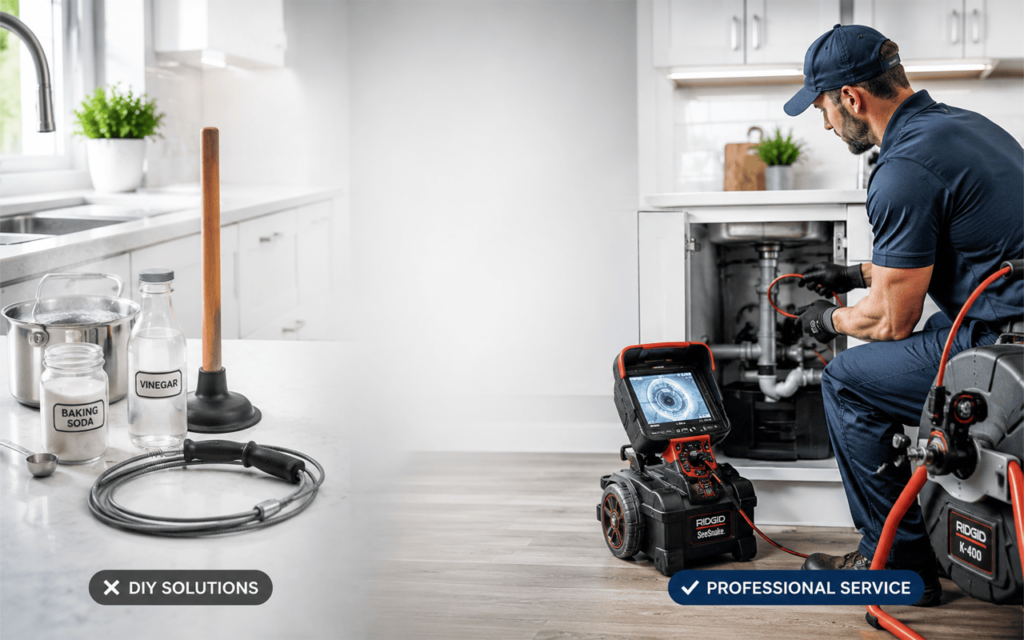
If none of these methods produce lasting results, or if the problem recurs within a short period, it’s time to call professionals who can fix slow draining sink issues with the right tools, hydro-jetting, camera inspections, and proper diagnosis.
DIY vs. Professional Drain Solutions: A Quick Comparison
| Method | Best For | Effectiveness | Risk Level |
| Boiling water flush | Grease / soap buildup | Low–moderate | Low (avoid PVC) |
| Baking soda & vinegar | Mild organic clogs | Low–moderate | None |
| Chemical drain cleaner | Minor surface clogs | Moderate | High (pipe damage risk) |
| Plunger | Soft blockages near drain | Moderate | Low |
| Manual drain snake | Clogs within 3–5 ft | Moderate–high | Low |
| Professional snake/auger | Deep clogs | High | None (pro handles risk) |
| Hydro-jetting | Grease-coated pipes | Very high | None (pro handles risk) |
| Camera inspection | Recurring / unknown cause | Diagnostic | None |
How CR Plumbing, Air and Electric Handles Drain Problems
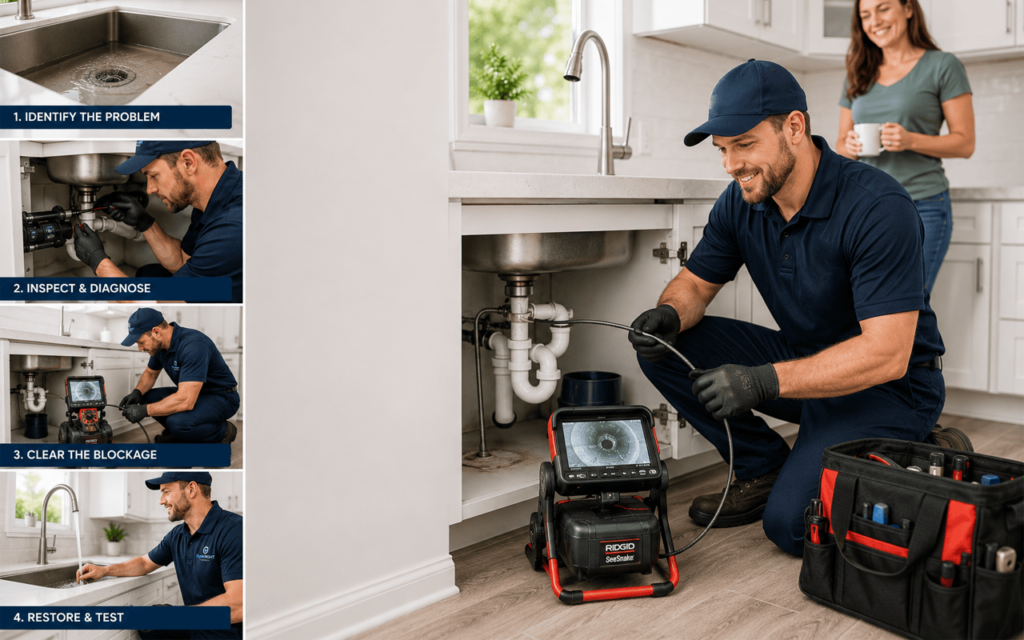
At CR Plumbing, Air and Electric, we’ve seen every variation of the slow sink drain, from simple grease clogs to tree-root intrusions and collapsed sewer lines. Our licensed plumbers use industry-leading diagnostic tools, including high-definition drain cameras and professional-grade hydro-jetting equipment, to identify and resolve problems at their source.
We don’t believe in temporary fixes. When you call us for a slow draining kitchen sink, we:
- Conduct a thorough visual and diagnostic inspection
- Identify the root cause, not just the symptom
- Provide a transparent, upfront quote before any work begins
- Offer lasting solutions backed by our service guarantee
Conclusion
A slow sink drain is never just a minor annoyance, it’s your plumbing system telling you something is wrong. The good news is that caught early, most kitchen drain issues are straightforward and affordable to resolve. The key is knowing the difference between a DIY-friendly clog and a problem that needs expert tools and trained eyes.
When recurring drainage problems, strange sounds, or bad odors have you second-guessing that store-bought cleaner, CR Plumbing, Air and Electric is the team to call.
FAQs
What causes a slow draining kitchen sink?
The most common causes of a slow draining kitchen sink are grease and fat buildup, accumulated food particles, soap scum deposits, and foreign objects lodged near the drain. In more serious cases, the issue may stem from a ventilation problem, tree root intrusion, or a deteriorating pipe, all of which require professional diagnosis.
How do I fix slow draining sink on my own?
To fix slow draining sink issues at home, start with a boiling water flush, followed by a baking soda and vinegar treatment. If those don’t work, clean the P-trap under the sink or use a manual drain snake. These methods work well for minor, surface-level clogs. Persistent or recurring problems need a licensed plumber.
When should I call a plumber for a slow kitchen drain?
Call a professional if the slow kitchen drain returns after repeated DIY treatments, if you hear gurgling noises, notice foul odors, or if multiple drains in the home are slow at the same time. These signs indicate a deeper problem that requires camera inspection or hydro-jetting, not a plunger.
Can a slow sink drain cause water damage?
Yes. A slow sink drain left untreated can lead to water backup, pipe pressure buildup, and eventual overflow. Over time, moisture from a slow or blocked drain can damage under-sink cabinetry, subflooring, and even promote mold growth, leading to repairs that far exceed the cost of early plumbing service.
Is chemical drain cleaner safe to use?
Chemical drain cleaners can dissolve minor clogs but carry serious risks. They can corrode older pipes, especially those made of PVC or galvanized steel, and are harmful to the environment. For a slow draining kitchen sink, natural alternatives or mechanical methods are safer for both your pipes and the water system.
Does CR Plumbing, Air and Electric offer emergency plumbing service?
Yes. CR Plumbing, Air and Electric provides emergency plumbing services around the clock. Whether you’re dealing with a complete drain backup or a burst pipe, our team is available when you need us most, with fast response times and transparent pricing.