




When & Why You Should Turn Off Your Water Heater
Knowing when and how to turn off water heater can help prevent safety risks, reduce unnecessary energy use, and protect your plumbing system. Whether you’re preparing for a vacation, handling a repair, or responding to an issue with the unit, understanding the proper shutdown process is important. This guide covers key situations that may require shutting off a water heater, important safety considerations, maintenance insights, and expert recommendations from CR Plumbing, Air and Electric to help homeowners keep their systems operating efficiently.
Knowing how to turn off water heater could save you from a flooded basement, a sky-high energy bill, or a dangerous gas leak. Although water heaters are designed to operate safely for years, there are certain situations where leaving the unit running can increase the risk of property damage, safety hazards, and unnecessary utility costs.
Whether you’re leaving for an extended vacation, preparing for plumbing services, performing routine maintenance, or responding to warning signs such as leaks, strange noises, or rust-colored water, knowing when and how to shut down your water heater is an important part of responsible homeownership. The correct process can vary depending on whether you have a gas or electric water heater, and taking the wrong steps may create additional risks or damage to the system.

The Importance of Knowing How To Turn Off Water Heater
Most homeowners never think about their water heater until something goes wrong. But this hardworking appliance runs 24/7, silently consuming energy and building pressure, and it won’t last forever without occasional attention. There are several situations where knowing how to shut off a hot water heater isn’t just useful; it’s essential:
- Preventing water damage during a leak or burst tank
- Saving energy during extended vacations or low-demand periods
- Enabling safe repairs, no technician should work on a live unit
- Avoiding hazardous conditions like gas buildup or electrical faults
- Extending the lifespan of the unit through proactive maintenance
Whether you have a tank-style or tankless unit, gas or electric, the process is straightforward, once you know what you’re doing.
When Should You Turn Off Your Water Heater?

1. Before Going on Vacation (7+ Days)
Leaving your water heater running while you’re away is a waste of energy and a potential liability. If a leak develops while you’re gone, you could return to significant water damage. Switching the unit to “Vacation Mode” (available on most modern units) or understaning how to turn off hot water heater is the smarter move.
Energy fact: Water heaters account for roughly 18% of a home’s energy use, according to the U.S. Department of Energy. Even a week of standby heating adds up.
2. During a Plumbing Repair or Water Heater Repair
Any time a plumber needs to access your water lines or the unit itself, the heater should be off. Running hot water through open pipes during a repair is dangerous and can cause scalding injuries or system damage.
3. When You Detect a Gas Smell or Leak
If you smell rotten eggs near your unit, that’s a warning sign of a gas leak, and you need to act immediately. Shut off your gas water heater at the gas valve, ventilate the area, leave the house, and call a professional. Do not attempt repairs yourself.
4. During Extended Power Outages
Electric water heaters connected to a dead grid can experience element damage if the tank runs dry. Turning the unit off protects the heating elements until power is fully restored.
5. When You Notice Rust, Leaks, or Unusual Sounds
Rumbling, popping, or banging sounds often signals sediment buildup or a failing element. Turning off the unit before getting a professional inspection can prevent a minor issue from becoming a costly emergency.
How to Turn Off Gas Water Heater
Knowing how to turn off gas water heater correctly is critical, improper shutoff can leave gas flowing, which is extremely dangerous.
Follow these steps:
- Locate the thermostat dial on the front of the unit. Turn it to the “Pilot” or “Vacation” setting rather than fully off, this keeps the pilot light going without heating a full tank.
- To fully shut off: Turn the thermostat dial to “OFF.”
- Close the gas supply valve: Find the gas line running into the heater and turn the valve 90 degrees (perpendicular to the pipe = closed).
- Shut off the cold water supply: Turn the cold water inlet valve (typically located on top of the unit) clockwise until fully closed.
- For full draining: Attach a hose to the drain valve at the base, open a hot water faucet in the house to relieve pressure, then open the drain valve.
Safety note: If you smell gas at any point, skip the thermostat steps and go directly to the main gas shutoff. Call a licensed plumber or your gas utility company immediately.
How to Turn Off an Electric Water Heater
Wondering how to turn off a hot water heater that runs on electricity? It is simpler and lower-risk than gas, but still requires care around electrical components.
- Go to your circuit breaker panel and locate the breaker labeled “Water Heater”, it’s typically a double-pole 30-amp breaker.
- Flip the breaker to the OFF position.
- Shut off the cold water supply valve on top of the unit.
- Optionally drain the tank: Connect a garden hose to the drain valve, open a hot water faucet upstairs to allow air in, and open the drain valve.
Important: Never run an electric water heater with an empty tank. The heating elements will burn out rapidly, a condition called “dry firing.”
Quick Reference: Gas vs. Electric Shutoff
| Feature | Gas Water Heater | Electric Water Heater |
| Primary shutoff | Gas valve + thermostat to OFF | Circuit breaker to OFF |
| Water supply | Close cold water inlet valve | Close cold water inlet valve |
| Risk if done wrong | Gas leak, fire hazard | Element burnout if tank is empty |
| Vacation setting | Turn dial to “Pilot” | Switch breaker off or use the timer |
| Restart difficulty | Requires relighting pilot (older units) | Flip breaker back on |
| Professional help needed? | Yes, for any gas smell or repair | Yes, for wiring issues |
| Time to cool down | ~1–2 hours | ~1–2 hours |
How to Turn Off a Tankless Water Heater
Tankless heaters are more energy-efficient but follow different shutdown procedures:
- Gas tankless units: Turn the gas supply valve off and cut power to the unit at the breaker.
- Electric tankless units: Simply switch off the dedicated circuit breaker.
- For maintenance or long-term shutoffs, also close the cold water inlet valve and open the service ports to flush any remaining water.
Water Heater Maintenance: What Homeowners Overlook
Beyond knowing how to turn off water heater, it is also important to inspect and maintain it. Regular water heater maintenance extends unit life and improves efficiency:
- Flush the tank annually to remove sediment buildup; sediment causes the rumbling sounds many homeowners hear
- Test the pressure relief (T&P) valve once a year, this safety valve prevents dangerous pressure buildup
- Inspect the anode rod every 2–3 years and replace it when it’s heavily corroded
- Check for rust or corrosion on the tank exterior, connections, and valves
- Set the thermostat to 120°F, this is the EPA-recommended temperature that balances safety and energy efficiency
CR Plumbing, Air and Electric: Local Experts You Can Trust
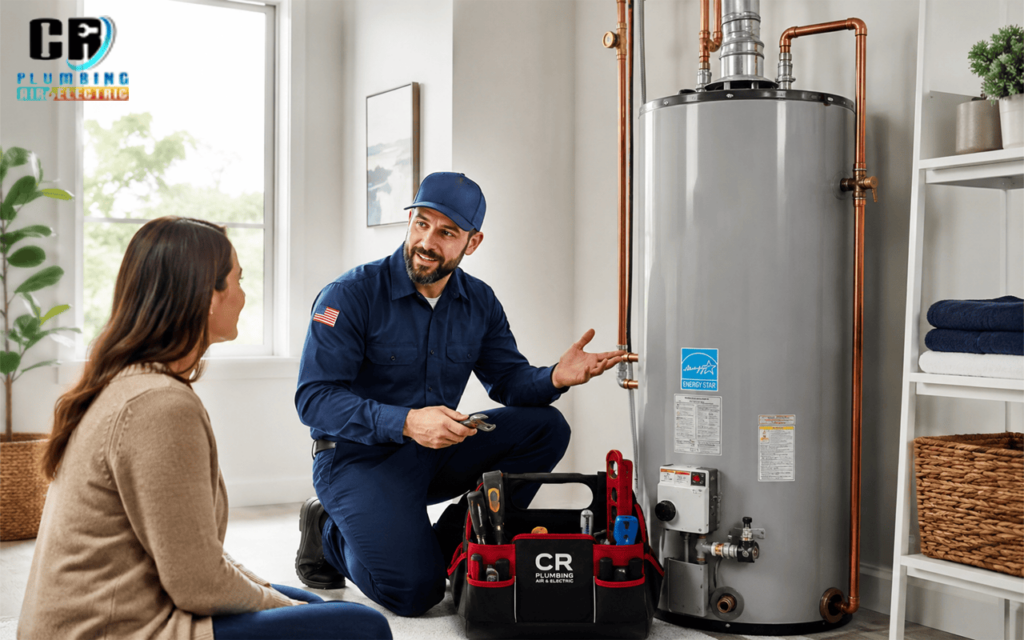
When a DIY shutoff reveals a bigger problem, or when you’d simply rather have a professional handle it, CR Plumbing, Air and Electric is ready to help. From routine water heater maintenance and flushing to full water heater repair and replacement, the CR team brings licensed expertise and honest pricing to every job.
Whether you’re dealing with a stubborn pilot light that won’t relight, a leaking pressure relief valve, or a tank that’s simply reached the end of its life, CR Plumbing, Air and Electric offers affordable plumbing services without cutting corners. Our technicians are familiar with all major brands and fuel types, gas, electric, and tankless, and can often diagnose and resolve issues in a single visit.
If you’re searching for a reliable local team for water heater repair and maintenance,, CR Plumbing, Air and Electric is the name your neighbors trust.

Frequently Asked Questions
Q: Is it safe to turn off my water heater while on vacation?
Yes. Yes, it reduces standby heat loss and eliminates the risk of an unattended leak escalating into major water damage. For trips longer than a week, it’s a smart routine step.
Q: How to turn off gas water heater quickly in an emergency?
In an emergency, turn the gas supply valve 90 degrees so it’s perpendicular to the pipe; that closes it immediately. Then turn off the cold water supply valve. If you smell gas, don’t attempt anything further; evacuate and call 911 or your gas utility.
Q: Will turning off my water heater damage it?
No, when you are aware of how to shut off water heater following the correct steps will not damage it. The risk only arises with electric heaters if you drain the tank and then switch the power back on without refilling first (“dry firing”).
Q: How long does it take for water in the tank to cool after shutoff?
A standard 40–50 gallon tank takes approximately 1 to 2 hours to cool to a safe handling temperature after shutoff. Larger tanks (75–80 gallons) can take 2–3 hours. Never drain a tank immediately after shutoff; the water will be scalding hot.
Q: How often should I turn off water heater and and flush it?
After you are aware of the proper steps to how to turn off hot water heater, the frequency of tunring it off should also be understood. ost manufacturers and plumbers recommend flushing the tank once per year. This involves briefly shutting off the unit, attaching a drain hose, and flushing out sediment. If your water is particularly hard (high mineral content), twice a year is better.
Q: Can I turn off my water heater to save money?
Yes, but the savings depend on your habits. If you consistently won’t need hot water for 8+ hours (overnight, during vacation, etc.), shutting it down or using a timer makes sense. For shorter gaps, the energy cost of reheating a full tank often offsets the savings. To know how to turn off water heater safely, contact our experts at CR Plumbing, Air and Electric.