




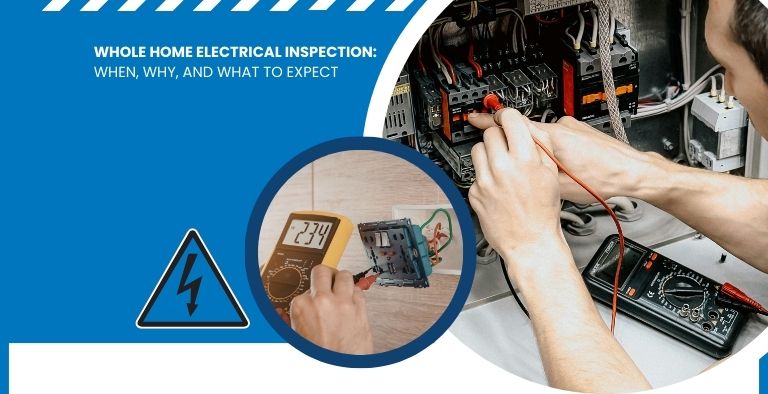
Whole Home Electrical Inspection: When, Why, and What to Expect
Electrical systems quietly support daily comfort and safety but often go unnoticed until problems arise. Ageing wiring, overloaded panels, and hidden faults can create serious risks if ignored. A whole home electrical inspection evaluates the entire system to identify hazards, improve performance, and prevent failures. This blog explains when inspections are needed, why they matter for household safety, and what homeowners can expect during the process.
Why Electrical Safety Matters in Every Home
Electrical systems power lighting, appliances, heating, cooling, and modern smart devices. As homes add more electronics, electrical demand increases without homeowners always realizing it. Small warning signs such as flickering lights, warm outlets, or frequent breaker trips often point to deeper issues.
A whole home electrical inspection helps uncover hidden risks before they escalate. It focuses on safety, system capacity, and reliability. For homeowners, this electrical inspection acts as preventive protection rather than a reactive fix.
What Is a Whole Home Electrical Inspection

A whole home electrical inspection is a detailed evaluation of your entire electrical system. It goes beyond a quick visual check and reviews how power enters the home, how it is distributed, and how safely it is used.
This type of inspection typically includes:
- Electrical panel and breaker assessment
- Wiring condition and insulation checks
- Grounding and bonding verification
- Outlet, switch, and fixture inspection
- Safety device testing
The goal is to ensure the system can safely support your household’s electrical needs.
When Should You Schedule a Whole Home Electrical Inspection
Knowing the right time for inspection is just as important as the inspection itself.
After Purchasing a Home
Older homes may need wiring repair or have overloaded systems, while newer homes may still have installation issues. A whole home electrical inspection provides clarity before problems surface.
During Renovations or Remodels
Adding gas appliances or upgraded HVAC systems increases electrical demand. An inspection ensures your existing system can handle the added load safely.
If You Notice Warning Signs
Frequent breaker trips, buzzing sounds, burning smells, or warm outlets should never be ignored. These signs often indicate underground wiring issues or electrical issues that require immediate evaluation.
Periodic Safety Reviews
Even without visible issues, many homeowners schedule inspections every few years to maintain safety and system performance.
What a Whole Home Electrical Inspection Covers

1. Electrical Panel and Breakers
The electrical panel controls power flow throughout the home. Inspectors check for proper breaker sizing, labeling, secure connections, and signs of overheating or corrosion.
An overloaded or outdated electrical panel upgrade is one of the most common safety concerns identified during a whole home electrical inspection.
2. Wiring Condition and Installation
Wiring hidden behind walls is inspected where accessible. Inspectors look for damaged insulation, improper splices, and outdated wiring types that no longer meet safety standards.
This step helps reduce fire risk and ensures consistent power delivery.
3. Grounding and Bonding
Grounding protects people and appliances from electrical faults. A whole home electrical inspection verifies that grounding and bonding systems are properly installed and connected.
Poor grounding can lead to shock hazards and appliance damage during power surges.
4. Outlets, Switches, and Fixtures
Outlets and switches are tested for proper grounding, polarity, and secure installation. GFCI and AFCI protection is reviewed in required areas such as kitchens, bathrooms, and laundry rooms.
Loose or damaged outlets are a common issue that inspections uncover.
5. Lighting and Ceiling Fixtures
Inspectors examine light fixtures for proper mounting, wiring integrity, and heat buildup. Improperly installed fixtures can pose both fire and shock hazards.
This step also ensures fixtures are compatible with bulb types and wattage ratings.
6. Appliances and Dedicated Circuits
Large appliances such as ovens, dryers, and HVAC systems require dedicated circuits. A whole home electrical inspection confirms that these connections are properly sized and protected.
This helps prevent overloads and premature equipment failure.
7. Surge Protection and Power Safety
Voltage spikes can damage electronics. Inspectors check for whole house surge protection and evaluate grounding quality to reduce surge impact.
Homes with home offices or smart systems benefit significantly from this assessment.

What to Expect During the Inspection Process
A typical whole home electrical inspection takes a few hours depending on home size and system complexity. Inspectors will access the electrical panel, outlets, attic or basement wiring where possible, and exterior service connections.
Homeowners usually receive a written report outlining findings, safety concerns, and recommended actions. Serious electrical issues are prioritized so they can be addressed promptly.
Benefits of a Whole Home Electrical Inspection

A professional inspection helps homeowners:
- Reduce fire and shock risks
- Improve electrical efficiency
- Prevent unexpected outages
- Extend system lifespan
- Gain confidence in home safety
Rather than waiting for a failure, inspections provide proactive control.

Conclusion
Electrical safety is not something homeowners should assume. A whole home electrical inspection offers clarity, protection, and long term value. By evaluating panels, wiring, grounding, and devices, inspections uncover risks that are easy to miss but dangerous to ignore.
Scheduling inspections at the right time helps prevent emergencies, protects investments, and keeps households safe. For any homeowner focused on safety and reliability, a full electrical inspection is a smart and responsible step.
FAQs
1. What is a whole home electrical inspection
A whole home electrical inspection is a complete evaluation of a home’s electrical system. It includes panels, wiring, outlets, grounding, and safety devices. The inspection identifies hazards and performance issues. Homeowners receive recommendations for corrective action.
2. How long does a whole home electrical inspection take
Most inspections take two to four hours depending on home size. Older homes may take longer due to system complexity. Inspectors work systematically to ensure accuracy. A report is usually provided shortly after.
3. Is a whole home electrical inspection required for new homes
New homes are inspected during construction, but issues can still exist. A post purchase inspection adds reassurance. It confirms proper installation and safety. Many homeowners schedule one within the first year.
4. How often should homeowners schedule an inspection
Many experts recommend inspections every three to five years. Homes with older wiring or high electrical usage may need more frequent checks. Renovations also trigger the need for inspection. Regular reviews improve safety.
5. What problems are commonly found during inspections
Common issues include overloaded panels, loose wiring, missing grounding, and outdated outlets. These problems increase fire and shock risks. Early detection reduces repair costs. Inspections highlight both minor and serious concerns.
6. Does an inspection require turning off power
Some testing may require brief power interruption. Inspectors usually inform homeowners beforehand. Most of the inspection is non disruptive. Safety remains the top priority.
7. Can a whole home electrical inspection improve resale value
Yes. Inspection reports provide transparency to buyers. They demonstrate proactive maintenance. Addressing issues before selling builds buyer confidence. It can also speed up closing.
8. What should homeowners do after receiving the inspection report
Review the report carefully and prioritize safety related repairs. Address high risk issues first. Schedule follow up work with qualified professionals. Keep inspection records for future reference.