





Regular Water Heater vs Tankless: What’s the Smarter Investment?
Introduction
A water heater isn’t something you think about until it stops working. Then you’re standing in a cold shower trying to decide whether to fix what you’ve got or replace it with something completely different.
That’s usually when the tankless question comes up. Tank water heaters have been the default for decades — reliable, familiar, cheap to install. Tankless units cost more going in but promise lower bills and hot water that never runs out. So which one’s actually worth it?
Short answer: it depends on how much hot water your household uses and how long you’re staying in the home. Longer answer: keep reading. We’ll walk through installation costs, energy use, lifespan, and the maintenance each type actually needs, so you’re deciding off real numbers instead of a sales pitch.
How Each One Actually Works
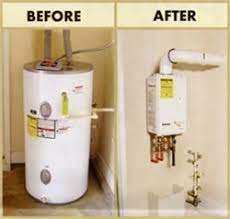
A traditional tank water heater keeps 30 to 80 gallons of water hot and ready, 24 hours a day. A heating element — gas or electric — cycles on and off to hold the water at whatever temperature you’ve set. Use some hot water, and cold water refills the tank to get reheated.
That “always ready” part is also the catch. Keeping a full tank hot around the clock, even at 2am when nobody’s showering, wastes energy. Plumbers call it standby heat loss, and it’s the single biggest reason tank heaters cost more to run month to month — especially once winter hits and the incoming water is colder to begin with.
Tankless units skip the tank entirely. Cold water only starts moving through the unit when you open a hot water tap, and a gas burner or electric element heats it on the spot, in real time. No standing tank, no standby loss, no 2am energy waste.
That’s not a marketing number, either — it’s a well-documented range for homes using under 41 gallons a day, which covers most households, and the efficiency gain is commonly cited around 24% to 34%. Bigger families with heavier demand still come out ahead, just by a smaller margin. And because there’s no tank to store, the units themselves are compact enough to mount on a wall and free up real floor space.
Traditional Water Heaters: Pros and Cons
Pros
- Costs less upfront than a tankless system
- Installs easily since it works with plumbing you already have
- Keeps multiple fixtures running at once without a fight over hot water
Cons
- Burns energy around the clock just keeping water hot, whether you’re using it or not
- Runs out — once the tank’s empty, everyone’s waiting
- Takes up real space, usually a closet or utility room
- Lasts 8 to 12 years on average, shorter than a tankless unit
Tank heaters aren’t a bad choice. They’re a compromise — cheaper to buy, more expensive to run.
Tankless Water Heaters: Pros and Cons
Pros
- Never runs out, period
- Uses less energy, which shows up on your utility bill
- Compact enough to mount on a wall
- Lasts 20 years or more with basic upkeep
Cons
- Costs more to install than a straight tank swap
- Sometimes needs a gas line or electrical upgrade to run
- Has a flow-rate ceiling — two showers and a dishwasher running at once can push it
- A few seconds’ delay before hot water arrives, since nothing’s pre-heated
The upfront number scares people off. The 15-year number usually changes their mind.
What It Actually Costs
Here’s where the two paths really split.
A tank water heater runs $500 to $1,500 installed — most of that reflects the fact that your home’s already plumbed for it. Swap the old one, hook up the new one, done in a few hours.
Tankless costs more going in: $1,500 to $3,500 installed. Some of that gap is the unit itself, some is the work to get there — a bigger gas line, a dedicated electrical circuit, sometimes both. It’s not a guaranteed add-on cost, but it’s common enough to budget for the possibility.
What closes the gap over time is the bill you don’t see: lower monthly energy use, and a unit still running years past the point a tank heater would’ve needed replacing twice over.
Maintenance: What Each One Actually Needs
Tank heaters need an annual flush to clear sediment off the bottom of the tank. Skip it long enough and it shortens the unit’s life and dents its efficiency. The anode rod inside also wears out and needs swapping every few years to keep corrosion in check.
Tankless units need descaling instead, especially on hard water, since mineral deposits build up inside the heat exchanger over time. Less frequent than a tank flush — but skip it, and you get the same result: lower performance, shorter lifespan.
Lifespan and How Each One Handles a Busy House
A tank water heater lasts 8 to 12 years before sediment and corrosion catch up with it. A tankless unit, properly maintained, is good for 20 years or more — there’s no standing water sitting around to rust it from the inside.
Where it gets more interesting is how each one handles a full house. A tank heater has a hard ceiling: once that 40 or 50 gallons is gone, you’re waiting on a refill. A tankless unit doesn’t have that problem — it has a different one. Run the shower, the dishwasher, and the washing machine at once in a house with a single undersized unit, and you’ll feel the pressure drop. Larger households sometimes need two tankless units instead of one to avoid that.
Hard Water Changes the Math a Little
Texas hard water is rough on both types, just in different ways. In a tank heater, mineral buildup settles at the bottom and eats away at efficiency over time. In a tankless unit, those same minerals coat the heat exchanger and mean more frequent descaling. A water softener helps either system hold up longer if your water’s particularly hard — worth asking about at installation.
So Which One Should You Actually Get?
If you’re in the home short-term, or money’s tight right now, a tank heater is the practical call. It’s cheaper today, and it’ll do the job.
If you’re staying long-term, want to stop worrying about running out of hot water, or you’re already replacing an old unit and open to spending more upfront, tankless wins on almost every long-term number: lower bills, longer life, less space taken up.
There’s no universally correct answer here — just the one that fits your house, your water use, and how long you’re planning to stay. If you want a second opinion on your specific setup, CR Plumbing can walk through it with you before you commit either way.
Key Takeaways
- Tank heaters cost less to install but more to run every month.
- Tankless units cost more upfront and typically last close to twice as long.
- Installation is simpler for tank heaters; tankless sometimes needs gas or electrical upgrades.
- Tank heaters need annual flushing; tankless needs periodic descaling, especially with hard water.
- Large households should plan around tank capacity or tankless flow rate — both have real limits.
FAQs
What’s the difference between a tankless water heater and a regular water heater?
A regular water heater stores 30 to 80 gallons of hot water and keeps it heated around the clock. A tankless unit heats water only as it flows through, with no tank and no standby energy loss. The tradeoff is upfront cost against long-term efficiency.
Is a tankless water heater better than a regular water heater?
For most households, yes, over time. Tankless units cost more to install but use less energy, last longer, and never run out of hot water. A tank heater is still the better call if you need the lowest possible upfront cost or you won’t be in the home long enough to recover the difference.
What’s the best choice between a regular and a tankless water heater for a large family?
Large families often lean tankless for the unlimited hot water, but flow rate matters — a single undersized unit can struggle when multiple fixtures run at once. Sizing it correctly, or installing two units, solves that.
Do tankless water heaters actually save money?
Yes, but not right away. The efficiency gain (commonly cited at 24% to 34% for homes using under 41 gallons a day) shows up as lower monthly bills, and it usually takes several years to offset the higher installation cost. Once it does, you’re saving for the rest of the unit’s 20-plus year life.