




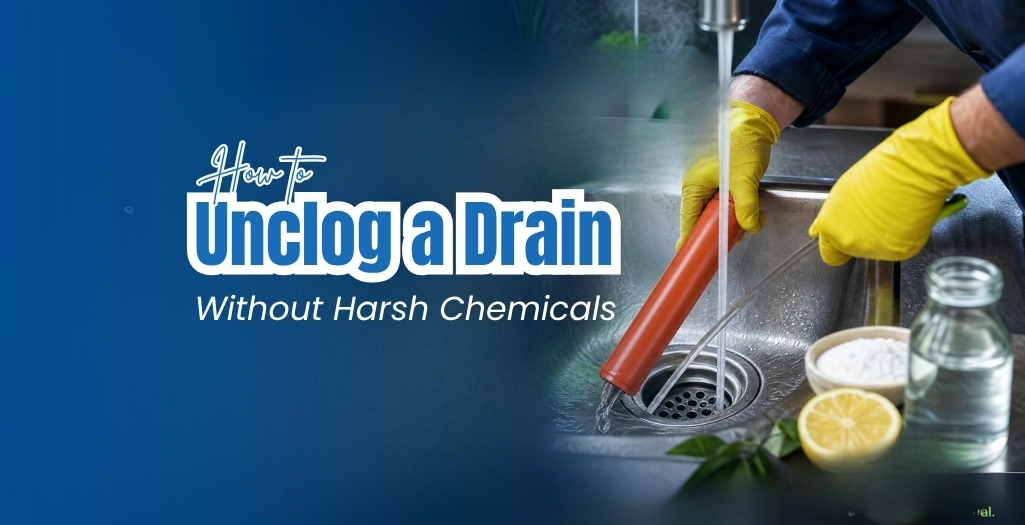
How to Unclog a Drain Without Harsh Chemicals
A clogged drain always seems to happen at the worst time. Reaching for a bottle of Drano feels like the fast fix, but chemical drain cleaners can eat away at older pipes and aren’t great for your plumbing — or the environment — in the long run. Here’s what actually works instead: six methods that use tools and ingredients you probably already have.

1. Use a Plunger
Using a plunger is the first and easiest step in unclogging a drain. Fill the sink or bathtub with a few inches of water, place the plunger over the drain, and pump it up and down vigorously. The suction created by the plunger will help dislodge any clogs and clear the drain. A cup-style plunger works fine for sinks and tubs — save the flange-style one for toilets, where it seals better.
2. Use a Drain Snake
If the plunger doesn’t work, the next step is to use a drain snake. A drain snake, also known as a plumbing auger, is a long, flexible tool that can reach deep into the drain to remove clogs. Insert the snake into the drain and turn the handle to extend it. Once you feel resistance, rotate the snake to break up the clog, and then pull it out. Go slow once you hit resistance — older pipes can crack if you force it.
3. Use Baking Soda & Vinegar
Baking soda and vinegar are natural ingredients that can be used to unclog drains. Pour half a cup of baking soda into the drain, followed by half a cup of vinegar. Cover the drain with a cloth or a plug to prevent the mixture from bubbling out. Let it sit for 30 minutes, and then flush it with hot water. Skip this one if you’ve already poured a chemical cleaner down the same drain — mixing the two isn’t safe.
4. Use Boiling Water
Boiling water is another natural and effective way to unclog a drain. Pour a pot of boiling water down the drain, and let it sit for a few minutes. Repeat this process a few times until the drain is clear. If your home has PVC drain pipes — common in newer DFW construction — use very hot tap water instead of a full rolling boil. Boiling water can soften PVC joints over repeated use.
5. Try a Wet/Dry Shop Vacuum
If a plunger and a drain snake haven’t fully cleared it, a wet/dry shop vac is worth trying before you call in help. Set it to wet mode, seal the drain opening with a cloth or a hose adapter to maximize suction, and run it for about 30 seconds. It won’t pull every clog, but it’s a good next step for a loose blockage sitting just below the opening — and it’s something most people already have in the garage.
6. Prevent Future Clogs
Preventing clogs is the best way to avoid the hassle of unclogging drains. To prevent clogs, avoid pouring grease, oil, and food scraps down the drain. Use a drain strainer to catch hair and debris, and regularly clean the drain with hot water and vinegar. If you have a garbage disposal, run cold water — not hot — while it’s on; cold water keeps grease solid so the disposal can actually grind it up instead of pushing it further down the line.

Why Professional Drain Cleaning Matters
Harsh chemical drain cleaners may offer a quick temporary fix, but they can also damage pipes, weaken plumbing connections, and create long-term drainage problems over time. A slow or clogged drain is often an early warning sign that indicates deeper plumbing problems that require professional attention. Issues such as grease buildup, pipe corrosion, damaged drain lines, tree root intrusion, and sewer line blockages can continue to worsen if not properly diagnosed and repaired. Professional drain cleaning services help protect your plumbing system while restoring safe, reliable drainage throughout your property.
At CR Plumbing, our licensed plumbers use hydro jetting, drain snakes, and sewer camera inspections to find out what’s actually causing a stubborn clog — not just clear it and hope it doesn’t come back. A camera inspection in particular is the difference between guessing and knowing: it shows exactly where the blockage is and what caused it, whether that’s grease buildup, a cracked line, or roots working their way into an older sewer line.Professional plumbing repair services also help improve water flow, extend pipe lifespan, and reduce the risk of future backups or water damage. We provide dependable drain cleaning and maintenance for homes, restaurants, rental properties, and commercial buildings that need consistent, reliable drainage.
DIY Drain Cleaning vs Professional Drain Cleaning Services
While natural DIY drain cleaning methods can help with small clogs, professional drain cleaning services provide deeper, longer-lasting solutions for recurring plumbing problems. Here’s a comparison between DIY methods and professional plumbing support:
| DIY Drain Cleaning Methods | Professional Drain Cleaning Services |
| Uses baking soda, vinegar, plungers, or hot water to clear small clogs | Uses advanced tools like hydro jetting, drain snakes, and sewer camera inspections |
| Best suited for minor sink or tub drain buildup | Effective for deep blockages, sewer line issues, and recurring drain problems |
| May temporarily improve water flow | Identifies and removes the root cause of the clog |
| Limited ability to detect hidden pipe damage or buildup | Professional diagnostics locate damaged pipes, grease buildup, and tree root intrusion |
| Chemical cleaners may damage pipes | Safe, non-invasive cleaning methods protect your plumbing system |
| No preventative maintenance or plumbing inspection included | Includes full plumbing evaluation and recommendations to prevent future clogs |
| DIY fixes may need repeated attempts | Professional repairs provide longer-lasting drainage performance |
CR Plumbing Has You Covered

Most clogs really can be handled with a plunger, a drain snake, or the baking soda and vinegar combo — no harsh chemicals required. But if you’ve tried the above and the drain’s still slow, or it’s a clog that keeps coming back, that’s your sign to stop troubleshooting and call a professional. CR Plumbing offers drain cleaning across DFW that gets to the actual cause, not just the symptom.
Frequently Asked Questions
1. What is the best way to unclog drain without using harsh chemicals?
A combination of hot water, baking soda, and vinegar handles most everyday clogs without any chemical cleaner. Pour the baking soda first, follow with vinegar, let it sit for 20–30 minutes, then flush with hot water. It’s affordable, safer for your pipes long-term, and effective on the grease and soap buildup behind most household clogs.
2. How to unclog a drain without Drano?
Start with the least invasive option and work your way up: clear visible debris from the drain opening, try a plunger, then baking soda and vinegar if the plunger doesn’t fully clear it. Skipping the chemical cleaner isn’t just about the smell — it’s also one less thing that can damage older pipes over time.
3. What should I do if the clog is deep inside the pipe?
Pouring more of anything into the drain usually won’t reach a deep clog. A drain snake or hand auger physically reaches further into the line and can break through what a home remedy can’t touch. If it’s still backing up after a couple of tries with a snake, that’s typically a sign the blockage is further down than a homeowner can safely reach — time to call a plumber.
4. How do you unclog a sink without chemicals or Drano?
Clear any hair, food, or debris from the drain opening first, then use a plunger to create pressure and dislodge the clog. If that doesn’t fully clear it, follow with hot water and a baking soda and vinegar treatment. This combination handles the vast majority of kitchen and bathroom sink clogs without introducing anything that could damage your pipes or a septic system.
5. What can I use to unclog my drain?
Baking soda and vinegar are the two most useful household ingredients — the reaction between them helps break up buildup inside the pipe. Hot water alone also helps dissolve grease and soap residue. Both are safe to use regularly, unlike a chemical drain cleaner.
6. What’s a safe way to unclog drains in my home?
Start mechanical before you start chemical: a plunger or drain snake first, then natural methods like baking soda and vinegar if needed. Flushing drains with hot water on a regular basis also helps prevent buildup from becoming a full clog in the first place.
7. How do you unclog a tub drain without Drano or harsh chemicals?
Bathtub clogs are almost always hair. Start by clearing whatever’s visible from the drain cover, then use a drain snake or a baking soda and vinegar treatment to break up what’s left. Most tub clogs respond well to this without needing anything stronger.
8. How do you unclog a shower drain naturally?
Shower drains clog for the same reason tub drains do — hair and soap scum building up just below the drain cover. Remove what you can see by hand or with a drain-hair tool, then follow with a baking soda and vinegar treatment and a hot water flush. A weekly hot water rinse helps keep it from building back up.