




When to Schedule Water Quality Check for Your Property ?
Hard water, sediment buildup, chlorine imbalance, and hidden contaminants can affect plumbing systems, appliance efficiency, and overall water safety. Scheduling a professional water quality check helps property owners identify issues early and choose the right solution, whether that involves a water softener, advanced filtration, or a whole house water filter and softener system. Regular inspections are especially important after plumbing repairs, when moving into a new property, or when water quality changes suddenly. This blog explains the warning signs, testing frequency, treatment options, and long-term benefits of professional water quality services for residential properties.
Ever noticed white stains on faucets, skin issues, or a water heater that just doesn’t seem as efficient as it used to be? These small signs often point to one hidden issue, unbalanced water quality inside your home. Before choosing any solution, the first step is understanding what’s really flowing through your pipes through a proper water quality check.
Once the water condition is clear, homeowners can explore the right solutions, whether it’s improving overall water quality, addressing hard water concerns, or installing a water softener system for home use designed to protect plumbing and appliances more effectively. This is where professional plumbing and water treatment services, like those offered by CR Plumbing, Air and Electric, help homeowners identify and solve the issue the right way from the start.

What is a Water Quality Check and Why Does It Matter?
A water quality check is a professional assessment of your home’s water supply, typically testing for contaminants such as hardness minerals, chlorine, iron, lead, bacteria, pH imbalance, and other dissolved solids. While municipal water systems are regulated by the EPA, they cannot guarantee what happens to water after it leaves the treatment facility and travels through aging distribution lines to your home, especially if your neighborhood has older infrastructure.
For homes on well water, the situation is even more critical. Unlike city water, private wells receive no government monitoring. The CDC recommends testing well water at least once a year. But even homeowners on municipal supply benefit from a periodic check, particularly if they notice changes in taste, odor, skin irritation, or water pressure.
A thorough water test takes the guesswork out of home water management. It identifies exactly what’s in your water so you and your service provider can choose the right solution, whether that’s a water filtration installation, a water softener system, or a combination of both.
Key Signs Your Home Needs a Water Quality Check Right Now
Water problems rarely announce themselves all at once. They tend to show up gradually. Here are the most reliable warning signs that it’s time to call in a professional:
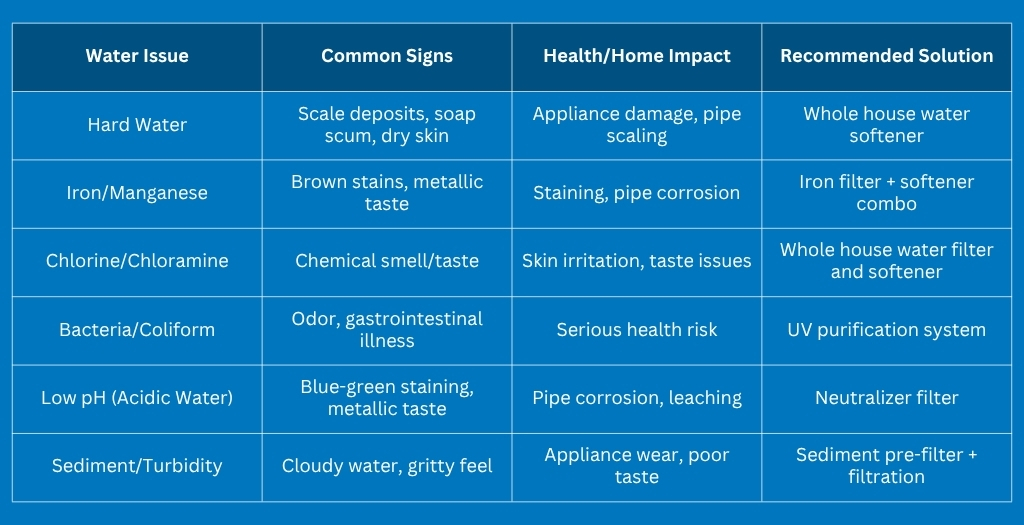
- Scale or white mineral deposits on faucets, showerheads, and kettle interiors
- Reddish-brown stains in your toilet bowl, bathtub, or sinks, which often indicate elevated iron or manganese.
- A rotten-egg or chlorine smell coming from your taps.
- Dry, itchy skin or brittle hair after showering, even when using good-quality products.
- Soap that struggles to lather or leaves a film on surfaces.
- Appliances like your water heater or dishwasher performing poorly or requiring frequent repairs.
- Unusually high water bills without an obvious cause, which can sometimes point to pipe corrosion.
If you’re experiencing two or more of these issues simultaneously, a water quality check is not just advisable, it’s urgent. The sooner you identify the root cause, the less damage accumulates inside your plumbing system and appliances.
When Should You Schedule a Water Quality Check? A Timing Guide
There’s no single universal answer, but water quality professionals generally recommend testing under the following circumstances:
1. When You Move Into a New Home
Testing your water should be one of the first steps after moving in. Standard home inspections usually don’t include water quality, even though pipes, water source, and past usage can all affect what’s flowing through your taps. A water quality check within the first month helps ensure your home water is safe and balanced from day one.
2. After Any Plumbing Work or Renovation
Plumbing repairs or renovations can disturb pipes and release sediment or old buildup into your water supply. Even minor work can temporarily affect water quality. A quick water quality check after any major plumbing project ensures your system is clean and functioning properly.
3. Seasonally (Especially After Heavy Rain or Flooding)
Heavy rain or flooding can impact both well and municipal water systems through runoff and contamination risks. If your area experiences extreme weather, it’s wise to test your water within a few weeks to ensure safety and stability.
4. Annually for Well Water Users
If your home relies on a private well, yearly testing is essential. Regular water quality check helps monitor key factors like bacteria levels, pH, and dissolved solids, especially in areas near farms or industrial activity where water changes more frequently.
5. When Your Water System Is Aging
If you already use a water softener system for home or filtration unit, performance naturally declines over time. Regular testing helps confirm whether your system is still effective or needs maintenance, repair, or replacement.
Water Quality Issues: Causes, Signs & Solutions
Understanding Water Softeners: Do You Need One?
Hard water is the most prevalent water quality problem in American homes. According to the U.S. Geological Survey, approximately 85% of homes in the country are supplied with hard water. Hard water carries dissolved calcium and magnesium minerals that accumulate inside pipes, water heaters, and appliances over time, reducing efficiency and shortening their lifespan.
A water softener system works through a process called ion exchange, replacing calcium and magnesium ions with sodium ions. The result is softer water that’s gentler on your skin, clothing, dishes, and plumbing. If your water quality check reveals a hardness level above 7 grains per gallon (GPG), a softener is usually recommended.
For comprehensive protection, many homeowners opt for a whole house water softener that treats every water point of entry in the home, from kitchen and bathroom faucets to showers, laundry machines, and water heaters. This is especially beneficial if you have young children, elderly family members, or anyone with sensitive skin or respiratory conditions.
Whole House Water Filter and Softener: The Combined Approach
A growing number of homeowners are choosing a whole house water filter and softener system, which combines sediment filtration, carbon filtration for chlorine and chemicals, and ion-exchange softening into one integrated solution. This approach delivers the broadest protection and requires only a single point of installation and maintenance.
This type of system is especially valuable in areas where water quality reports show multiple issues, for example, elevated hardness combined with chlorine taste from municipal treatment, or iron combined with sediment in well water. One investment addresses the entire problem.
What Does a Water Softener System Cost?
When evaluating a water softener system, several factors influence the overall investment, including system capacity, water hardness levels, home size, and installation requirements. Homes with higher water usage or severe hard water conditions may require more advanced systems. Additional considerations include maintenance needs, salt usage, and the potential savings from reduced appliance wear, improved efficiency, and lower consumption of cleaning products over time.
It’s worth noting that the long-term savings from a water softener often offset the upfront investment. Studies have shown that soft water can improve water heater efficiency by up to 29% and significantly extend the life of dishwashers, washing machines, and other appliances. When calculating water softener system cost, factor in what you’ll save on appliance repairs, cleaning products, and soap usage.
Water Filtration Installation and Water Softener Installation Near Me: What to Expect
After a water quality check, the next step is professional installation based on your home’s needs. Whether it’s a filtration unit or a combined system, the process follows a similar approach.
A technician reviews your plumbing layout and water pressure, then installs the system at the main supply line so all water sources are treated. Most water filtration installation jobs take a few hours, with only a short water shutdown during setup.
When looking for water softener installation near me, choose licensed professionals like CR Plumbing, Air and Electric to ensure proper installation and long-term performance.
CR Plumbing, Air and Electric: Experienced Water Filtration & Water Softener Installation Company
At CR Plumbing, Air and Electric, we take water quality seriously because we understand its direct impact on your home and your family’s wellbeing. Our certified technicians provide comprehensive water quality checks and whole house water filter and softener across residential and commercial properties, followed by expert recommendations tailored to your specific test results and budget.
Whether you need a basic water quality check to start the process or a complete water softener system for home installation setup, our team is equipped to handle it all from start to finish. We believe in transparent pricing, quality workmanship, and standing behind the work we do long after the job is complete.
CR Plumbing, Air and Electric serves homeowners who want professional guidance, not a hard sell. We’ll run the tests, explain what we find in plain language, and outline your options clearly, so you can make an informed decision with confidence.

Frequently Asked Questions
1. How often should I schedule a water quality check for my home?
For most homes, a water quality check every 2–3 years is recommended. However, you should test sooner if you notice changes in taste, odor, or skin irritation after bathing. Homes using private wells should test more frequently since water conditions can change faster.
If there has been flooding, plumbing work, or a local water advisory, immediate testing is important. Water conditions can shift without warning, and early detection helps prevent damage and ensures safer water throughout the home.
2. What does a water quality check typically test for?
A standard water quality check evaluates key water conditions that affect safety and plumbing performance. These usually include water hardness, pH levels, total dissolved solids, chlorine levels, and minerals like iron and manganese.
In more detailed testing, checks may also look for contaminants such as heavy metals, nitrates, or bacteria depending on your water source. The results help determine whether you need a water filtration installation or a water softener system for home use.
3. What is a whole house water softener, and do I need one?
A whole house water softener is installed at the main water line to treat all water entering your property. It reduces hardness minerals like calcium and magnesium before they reach faucets, appliances, and plumbing fixtures.
You may need one if your water quality check shows hard water levels or if you notice scale buildup, dry skin, soap issues, or appliance wear. Hard water is extremely common in many regions, which is why water softener system solutions are widely used in residential homes.
4. What is the cost of water softener system?
The water softener system cost depends on several key factors such as home size, water hardness level, system type, and installation requirements. Homes with higher water usage or severe hard water issues may need larger systems or combined filtration setups.
Additional factors include plumbing adjustments and whether a whole house water filter and softener is installed together. Maintenance costs are usually related to salt refills and filter replacements over time.
5. What is the difference between a water filter and a water softener?
A water filter and a water softener system serve different purposes. A water filter removes contaminants like sediment, chlorine, and bacteria, improving taste and safety. A water softener specifically targets hardness minerals such as calcium and magnesium.Many homes benefit from a combined whole house water filter and softener system, which addresses both contamination and hard water issues. A water quality check helps determine which system your home actually needs.