



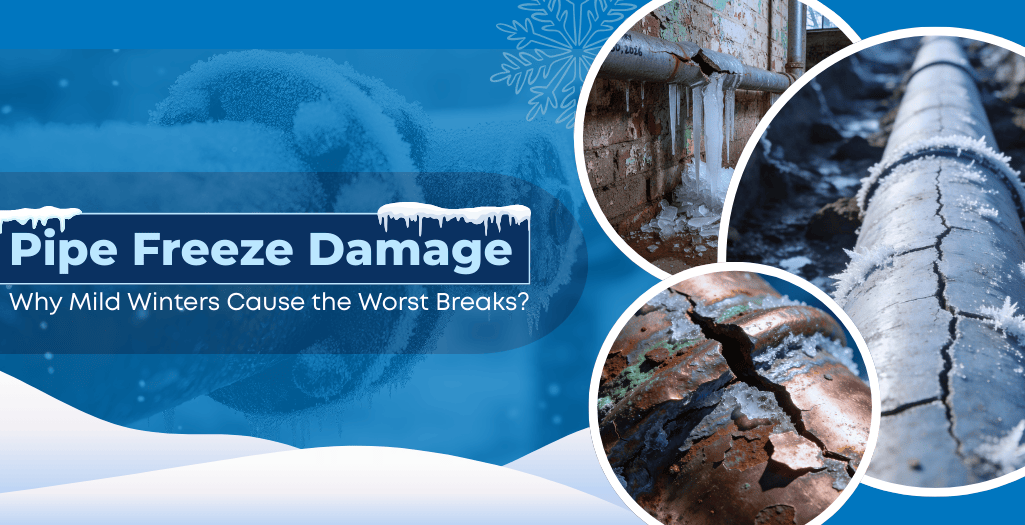
Pipe Freeze Damage: Why Mild Winters Cause the Worst Breaks
Introduction
Most homeowners associate pipe freeze damage with harsh, sub-zero winters. Surprisingly, some of the worst frozen pipe damage occurs during mild winters. These seasons bring inconsistent temperatures that cause pipes to freeze, thaw, and refreeze repeatedly. This cycle puts immense stress on plumbing systems and often leads to sudden failures.
Mild winters also create a false sense of safety. Property owners may skip pipe freeze protection steps, assuming the risk is low. When temperatures dip unexpectedly, unprepared pipes become vulnerable. Understanding why pipes freeze and burst during mild conditions is key to avoiding expensive plumbing repairs and prolonged water damage.
Why Mild Winters Are More Dangerous Than Deep Freezes
Extreme cold is predictable. Mild winters are not. Temperature swings between warm afternoons and freezing nights create the perfect environment for pipeline freezing. Pipes partially freeze overnight and thaw during the day, causing expansion and contraction inside the pipe walls.
This repeated stress weakens pipes over time. By the time a full freeze occurs, the pipe material may already be compromised. When water expands during freezing, pressure builds rapidly, increasing the likelihood of rupture. This is why frozen pipe damage often appears suddenly after what seems like a minor cold snap.
Another issue is delayed detection. Slow leaks caused by micro-cracks may not be visible until significant frozen pipe water damage has spread behind walls or under floors.
How Pipe Freeze Damage Actually Happens
Contrary to popular belief, pipes do not burst because ice is sharp. Pipes fail because freezing water expands and increases pressure inside a closed system. When water freezes, it expands by nearly nine percent. If that expansion has nowhere to go, pressure builds between the ice blockage and a closed faucet or valve.
This answers a common question: can pipe burst from freezing even if it is not fully frozen? Yes. The pipe often bursts at a weaker section away from the ice blockage, releasing water once thawing begins.
Materials also play a role. Older metal pipes are more prone to cracking, while some plastic pipes can split lengthwise after repeated freeze cycles.
Pipe Freeze Warning Signs You Should Never Ignore
Early pipe freeze warning signs are often subtle. Reduced water flow, odd noises when turning on faucets, or visible frost on exposed pipes are all indicators of pipe and water line freezing.
Other warning signs include unexplained drops in water pressure or water discoloration after thawing. These symptoms suggest internal pipe damage that could worsen with the next temperature drop.
Ignoring these signs often leads to frozen pipe water damage that affects drywall, flooring, insulation, and electrical systems. Early action can prevent a minor issue from becoming a structural problem.
Pipe Freeze Protection Starts With Awareness
Pipe freeze protection is not limited to extreme climates. Homes in moderate regions are often less prepared, making them more vulnerable during mild winters. Insulation gaps, unsealed crawl spaces, and exterior wall pipes are common weak points.
Consistent indoor heating, even when temperatures fluctuate, helps stabilize pipe conditions. Opening cabinet doors under sinks allows warm air to circulate around vulnerable plumbing. These small steps reduce the risk of frozen pipe damage during overnight freezes.
The Hidden Cost of Frozen Pipe Water Damage
Frozen pipe water damage is rarely limited to the pipe itself. Once a pipe bursts, water can spread rapidly through walls, ceilings, and flooring. Damage often continues until the water supply is shut off, which may take hours if the issue occurs overnight or while the property is vacant.
Moisture trapped inside building materials creates long-term issues such as mold growth and weakened structural components. Repairs can involve drywall removal, flooring replacement, and electrical inspections, far exceeding the cost of basic pipe freeze prevention.
Insurance claims related to pipe freeze damage often reveal that the freeze itself was preventable with early intervention.
Why Pipes Freeze and Burst in Mild Winters
Understanding why pipes freeze and burst requires looking at environmental patterns. Mild winters bring rapid temperature drops that catch plumbing systems off guard. Pipes that are exposed or poorly insulated cool faster than indoor air.
Additionally, reduced water usage during colder months allows water to remain stagnant inside pipes longer, increasing freeze risk. This is especially common in guest bathrooms, basements, and seasonal properties.
The combination of stagnant water, temperature fluctuation, and material fatigue creates the ideal conditions for pipeline freezing and eventual rupture.
What To Do If You Need to Freeze Pipe for Repair
In some controlled situations, professionals may freeze pipe for repair to stop water flow temporarily. This method uses specialized equipment and should never be attempted without proper training.
Attempting a DIY pipe freeze can cause uneven freezing, leading to pressure buildup and accidental bursting. Improper freezing can worsen existing pipe freeze damage rather than resolve it.
If a repair requires freezing a pipe, it should always be performed by trained technicians who understand system pressure and material limits.
Practical Pipe Freeze Prevention Strategies
Pipe freeze prevention begins with identifying vulnerable areas. Exterior walls, crawl spaces, garages, and attics are common problem zones. Insulating pipes in these areas reduces heat loss during overnight freezes.Dripping faucets during cold nights help relieve pressure buildup. Even a small water flow can prevent ice formation. Sealing air leaks around foundation vents and wall penetrations also plays a critical role in pipe freeze protection.
Regular plumbing inspections before winter help catch early signs of wear that increase freeze-related failure risk.
Why Mild Winters Increase Repair Delays
Mild winters often lead to higher service demand during sudden cold snaps. Many property owners experience frozen pipe damage at the same time, creating delays in emergency response.
Burst pipes during mild winters also tend to be harder to locate. Damage may be hidden behind walls and only discovered after thawing, complicating repairs and extending downtime.
Preparedness reduces both damage severity and repair timelines.
Long-Term Impact of Repeated Pipeline Freezing
Repeated pipeline freezing shortens the lifespan of plumbing systems. Even if a pipe does not burst, internal stress weakens joints and fittings over time. This leads to leaks months after the winter season ends.
These delayed failures are often misdiagnosed, resulting in repeated repairs rather than addressing the underlying freeze exposure issue. Long-term pipe freeze protection focuses on system-wide resilience rather than temporary fixes.
When to Act Before the Next Cold Snap
Waiting until pipes freeze is the most expensive strategy. Mild winters offer short windows to prepare between temperature drops. Taking action early ensures your plumbing system can handle fluctuations without failure.
Conclusion
Pipe freeze damage is not just a cold-climate problem. Mild winters create unstable conditions that cause some of the most severe frozen pipe damage. Temperature swings, delayed detection, and lack of preparation all contribute to burst pipes and costly water damage. Understanding why pipes freeze and burst, recognizing early warning signs, and implementing pipe freeze prevention strategies can protect both property and peace of mind throughout unpredictable winter seasons.
FAQs
1. Why does pipe freeze damage happen more often in mild winters?
Mild winters cause frequent temperature fluctuations that lead to repeated freezing and thawing. This cycle weakens pipe materials over time. Pipes may already be compromised when a sudden freeze occurs. The result is a higher risk of bursting compared to consistent cold conditions.
2. Can pipe burst from freezing even if only part of it freezes?
Yes, a pipe can burst even if ice forms in just one section. The pressure builds between the ice blockage and a closed valve. This pressure often causes failure at a weaker point elsewhere in the pipe. The burst usually happens when the pipe begins to thaw.
3. What are common pipe freeze warning signs?
Reduced water flow, unusual sounds when using faucets, and visible frost on pipes are common warnings. A sudden drop in water pressure can also signal internal ice formation. These signs should be addressed immediately to avoid frozen pipe water damage.
4. How does frozen pipe water damage spread so quickly?
Once a pipe bursts, water flows freely until the supply is shut off. This water can move through walls, ceilings, and flooring rapidly. Hidden leaks may continue for hours before detection. The longer the delay, the more extensive the damage becomes.
5. Why do pipes freeze and burst in homes with heating?
Even heated homes can have cold zones. Pipes near exterior walls, crawl spaces, or garages may not receive enough warmth. Air leaks and poor insulation increase exposure. These localized cold areas are enough to cause pipeline freezing.
6. Is pipe freeze protection necessary in warmer regions?
Yes, warmer regions often face higher risk due to lack of preparation. Homes may not be built with insulation designed for freezing temperatures. Sudden cold snaps catch systems off guard. Basic pipe freeze prevention is essential regardless of climate.
7. Is it safe to freeze pipe for repair at home?
Freezing a pipe for repair requires specialized equipment and training. Improper freezing can increase internal pressure and cause bursts. DIY attempts often worsen pipe freeze damage. This method should only be handled by qualified professionals.
8. How long does pipe freeze damage take to appear?
Some damage is immediate, while other issues appear after thawing. Micro-cracks may leak slowly and go unnoticed for weeks. Repeated freezing can cause delayed failures months later. Regular inspections help catch these problems early.