



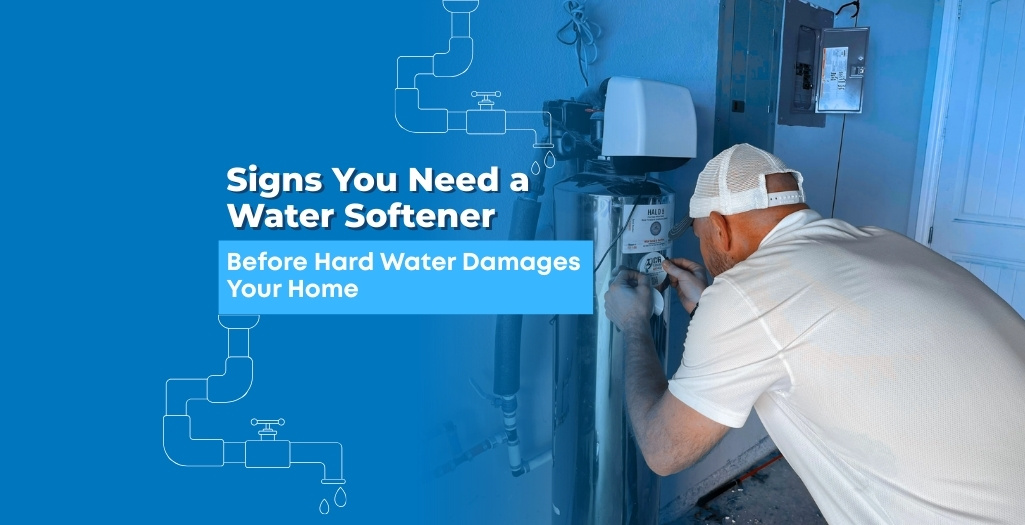
Signs You Need a Water Softener
Introduction
Most homeowners rarely think about their electrical panel until something goes wrong. Yet this single component manages how electricity is distributed throughout your home.
As homes add more appliances, electronics, and power demands, older panels often struggle to keep up. Recognizing the early signs that point toward an electrical panel replacement helps prevent safety concerns, unreliable power, and system overload. Acting before failure occurs gives homeowners control instead of forcing last-minute decisions.
What Hard Water Really Does Inside Your Home 
Hard water contains elevated levels of minerals, primarily calcium and magnesium. As water flows through pipes and appliances, these minerals separate and attach to surfaces. Over time, scale buildup restricts flow, insulates heating elements, and damages internal components.
Many hard water symptoms appear unrelated at first. Spotty dishes, stiff laundry, and dry skin seem minor until patterns emerge. When multiple plumbing issues appear together, they often point to a deeper water quality problem rather than isolated failures.
Sign 1: White Scale Buildup on Fixtures and Appliances
One of the most visible signs of hard water is white or chalky residue on faucets, shower heads, and sinks. This buildup is mineral scale left behind after water evaporates. Over time, scale hardens and becomes difficult to remove.
Inside appliances, scale coats heating elements and internal pipes. This forces systems like water heaters and dishwashers to work harder, increasing energy use. Persistent scale buildup is a strong indicator among the signs you have hard water and should not be ignored.
Sign 2: Reduced Water Pressure Throughout the Home
Mineral deposits narrow pipes from the inside. As scale accumulates, water flow becomes restricted, reducing pressure at faucets and showers. This often happens gradually, making it easy to overlook.
Homeowners may assume pressure loss is due to aging plumbing or municipal supply issues. In many cases, internal scale is the real cause. Reduced pressure is a long-term hard water symptom that signals internal damage is already underway.
Sign 3: Appliances Wearing Out Faster Than Expected
Hard water shortens appliance lifespan. Water heaters, washing machines, coffee makers, and dishwashers all suffer from mineral buildup. Scale reduces efficiency and increases internal strain.
If plumbing appliances require frequent repairs or replacement earlier than expected, water quality may be the underlying issue. This pattern is a common sign you need a water softener system for home protection rather than repeated appliance fixes.
How a Water Softener System Works
A water softener system removes excess minerals before water enters the home’s plumbing. Through ion exchange, calcium and magnesium are replaced with sodium or potassium ions. This process prevents scale formation throughout the system.
A whole home water softener protects every fixture and appliance simultaneously. Rather than addressing symptoms individually, softening water treats the root cause. This leads to consistent performance improvements across the household.
Sign 4: Soap and Detergent Not Working Properly
Hard water reacts with soap, reducing its effectiveness. This causes soap scum buildup on surfaces and leaves residue on skin and hair. Laundry washed in hard water often feels stiff and looks dull.
If you find yourself using more soap with poorer results, this is one of the clearest signs of hard water. These issues disappear when water hardness is properly treated.
Sign 5: Dry Skin, Hair, and Irritation After Bathing
Hard water leaves mineral residue on skin and hair. This residue disrupts moisture balance, leading to dryness, irritation, and dull hair texture. Many people mistake these symptoms for seasonal changes or product issues.
Persistent dryness despite changing soaps or lotions often points to water quality. These personal comfort issues are among the most overlooked hard water signs in the home.
Sign 6: Frequent Plumbing Repairs and Leaks
Mineral buildup increases pressure inside pipes by narrowing flow paths. Over time, this stress weakens joints and fittings. Small leaks may develop behind walls or under floors.
If plumbing repairs become more frequent without clear external causes, hard water may be accelerating wear. Addressing water quality reduces ongoing strain and lowers repair frequency.
When Hard Water Starts Costing More Than You Expect

Hard water damage often shows up in maintenance budgets before it becomes visible. Increased energy bills, higher detergent usage, and appliance repairs all add up over time. These costs continue rising as scale accumulates.
Testing water hardness provides clarity. It confirms whether observed problems align with mineral content rather than unrelated system issues.
Sign 7: Spots and Film on Dishes and Glassware
Hard water leaves behind cloudy film and spots after washing. This residue remains even when dishwashers function correctly. Rewashing dishes rarely solves the problem.
These visual signs indicate mineral saturation in water. Over time, dishwashers also suffer internal scale damage, reducing cleaning performance further.
Sign 8: Water Heater Efficiency Declining
Scale buildup inside water heaters insulates heating elements, making it harder to heat water efficiently. This increases energy consumption and recovery time. Rumbling noises are often caused by mineral deposits breaking loose during heating cycles.
Water heaters affected by hard water fail sooner than expected. This is a costly outcome that a water softener system for home use can help prevent.
Whole Home Water Softener vs Point Solutions
Temporary fixes like descaling agents treat symptoms but not the cause. A whole home water softner addresses hardness before water reaches any system. This provides consistent protection across plumbing, appliances, and fixtures.
Point solutions may reduce visible scale but do nothing for internal pipe buildup. Long-term protection requires treating water at entry.
When the Signs Add Up
Hard water issues rarely appear alone. When multiple symptoms occur together, the damage is already progressing. Addressing water hardness early prevents compounding effects that impact every part of the home.

Evaluating system options early allows homeowners to choose solutions based on household size, usage, and hardness levels.
Long-Term Benefits of Addressing Hard Water Early
Softened water extends appliance lifespan, improves efficiency, and reduces maintenance demands. Plumbing systems experience less stress, and fixtures stay cleaner with less effort. Personal comfort improves as well, with softer skin and hair.
These benefits compound over time. Addressing the signs you need a water softener early prevents future damage rather than reacting to failures later.
Knowing When to Take Action
Ignoring early signs of hard water allows damage to spread silently. By the time leaks or appliance failures occur, repair costs are significantly higher. Early action shifts spending from repairs to prevention.

Conclusion
Hard water damage develops slowly but impacts every part of the home. From plumbing and appliances to personal comfort, the effects are wide-reaching. Recognizing the signs you need a water softener allows homeowners to protect systems before failures occur. Addressing hard water signs early through a water softener system for home use reduces maintenance costs, improves efficiency, and preserves long-term property value.
FAQs
1. What are the most common signs you have hard water?
Common signs include scale buildup, reduced water pressure, spotty dishes, and stiff laundry. Dry skin and hair are also frequent indicators. These symptoms often appear together rather than in isolation. Testing water hardness confirms the cause.
2. Can hard water damage plumbing pipes?
Yes, mineral buildup narrows pipes and increases internal pressure. Over time, this weakens joints and fittings. Small leaks may develop without visible warning. Addressing hardness reduces ongoing pipe stress.
3. How does a water softener system protect appliances?
A water softener system removes minerals before they enter appliances. This prevents scale buildup on internal components. Appliances operate more efficiently and last longer. Maintenance and energy costs decrease as a result.
4. Is a whole home water softner better than single-fixture solutions?
A whole home water softner treats water at the entry point. This protects every fixture and appliance consistently. Single-fixture solutions only address surface-level symptoms. Whole-home systems provide long-term protection.
5. Are hard water symptoms different in older homes?
Older homes often show damage sooner due to aging pipes. Mineral buildup compounds existing wear. Reduced pressure and leaks are more common. Early intervention is especially important in older systems.
6. Does hard water affect water heater performance?
Yes, scale buildup reduces heating efficiency and increases energy use. Over time, this shortens heater lifespan. Rumbling noises are a common warning sign. Softened water improves performance and reliability.
7. Can hard water impact cleaning results?
Hard water reduces soap effectiveness, leaving residue behind. This leads to soap scum, cloudy glassware, and stiff fabrics. Increased detergent use rarely solves the issue. Treating water hardness restores cleaning performance.
8. When should I consider installing a water softener system for home use?
If multiple hard water signs appear consistently, it is time to consider a system. Early installation prevents long-term damage. Water testing provides clarity. Acting sooner reduces repair and replacement costs.