





Signs Your Heater Needs Repair vs Replacement – Save Before It Fails
Few things are worse than waking up to a freezing house in the middle of winter. Your heater has one job, to keep you warm. But what happens when it starts struggling, making noises, or running endlessly without heating properly?
Most homeowners face the same dilemma: Should I repair my heater or replace it entirely?
The truth is, both options have pros and cons, but knowing the signs your heater needs repair vs replacement can save you hundreds (sometimes thousands) before it completely fails.
This blog breaks down the warning signs, repair costs, and smart ways to stretch your budget while keeping your home safe and cozy.
Why Identifying Early Signs Matters
Your heating system works hard every season. Ignoring small issues can quickly lead to costly breakdowns or even safety hazards. Addressing warning signs early helps you:
- Prevent expensive emergency repairs
- Improve energy efficiency
- Extend your system’s lifespan
- Maintain indoor comfort and air quality
A well-timed repair can fix the issue before it snowballs. But sometimes, it’s smarter, and more cost-effective, to invest in a full replacement.
Common Signs Your Heater Needs Repair
If your heating system is still relatively new (under 10 years old), repairing might be the right choice. Here’s what to look out for:

1. Inconsistent Heating Across Rooms
Uneven heating often means airflow problems, clogged vents, or a failing blower motor. This is typically fixable with cleaning or minor component replacements.
2. Unusual Noises
Grinding, banging, or squealing sounds are never normal. These noises usually indicate worn-out belts or bearings, which can be repaired easily if caught early.
3. Higher Energy Bills Without Increased Usage
A sudden spike in your energy bill means your heater is working harder than it should. A tune-up or filter replacement can restore efficiency and cut costs.
4. Short Cycling
If your heater turns on and off repeatedly, it could be due to a faulty thermostat or airflow restriction. This can usually be repaired without replacing the system.
5. Weak or No Airflow
Poor airflow may come from a blocked duct, clogged filter, or motor issue, most of which can be fixed affordably by a technician.
These problems are typical for systems that still have a few good years left. But what if your unit is older or keeps needing frequent fixes?
When It’s Time to Replace Your Heater
Even the best-maintained systems have a lifespan. If your unit shows these signs, replacement might be the smarter investment:
1. Your Heater Is Over 12–15 Years Old
Most furnaces and heat pumps last about 12 to 15 years. Beyond that, repairs become more frequent and less cost-effective.
2. Frequent or Expensive Repairs
If you’re calling your HVAC technician every season or repairs are costing more than 50% of a new unit’s price, it’s time to consider a replacement.
3. Poor Energy Efficiency Ratings
Older heaters use more energy to deliver the same warmth. Upgrading to a new high-efficiency unit can cut heating costs by 20–30%.
4. Strange Odors or Yellow Pilot Light
A yellow or flickering pilot light may indicate a carbon monoxide leak—a serious safety issue. If this happens, shut off the unit immediately and call a professional.
5. Uneven Heating and Excessive Noise
If repairs don’t fix these issues, it’s often due to internal component failure. Replacing the system can restore consistent comfort and quieter performance.
Repair vs Replacement: How to Decide Smartly
Here’s a simple rule of thumb HVAC professionals use:
If the repair cost multiplied by your heater’s age is more than the cost of a new system, replace it.
For example:
- A $500 repair on a 14-year-old furnace = 500 × 14 = 7000
- If a new system costs around $6,500–$7,000, replacing makes better financial sense.
| Factor | Repair | Replacement |
| System Age | Less than 10 years | 12+ years |
| Repair Frequency | Occasional | Frequent |
| Energy Bills | Slightly high | Consistently high |
| Efficiency | Moderate | High (energy-efficient models) |
| Warranty Coverage | Active | Expired |
| Safety Concerns | Low | Increasing risk |
Use this table as a quick reference when you’re unsure what to choose.
Average Costs: Repair vs Replacement
Knowing the numbers helps you plan better. Here’s a general idea of what to expect in the U.S.:
| Service Type | Average Cost Range |
| Basic Heater Repair | $150 – $600 |
| Major Component Replacement | $800 – $1,500 |
| Full Heater Replacement | $3,500 – $8,000 |
| High-Efficiency Furnace Installation | $5,000 – $10,000 |
| Regular Maintenance Tune-Up | $100 – $250 |
If your system is old and your next repair estimate crosses $1,200, it might be smarter to invest in a replacement.
How to Save Money Before It Fails
You don’t have to wait for a total breakdown to act. Here’s how homeowners can stay ahead while saving money:
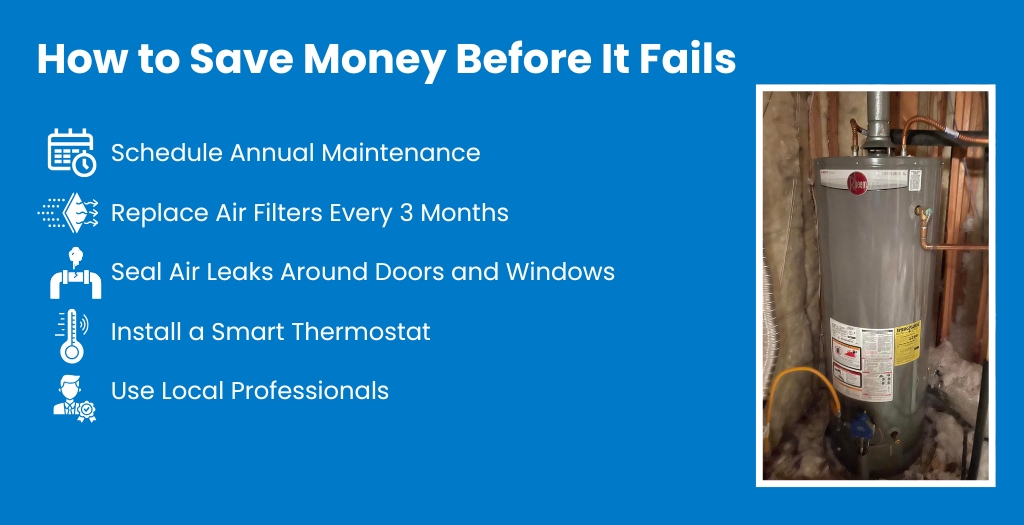
- Schedule Annual Maintenance
A yearly tune-up keeps your heater running efficiently and prevents surprise failures. - Replace Air Filters Every 3 Months
Clean filters help airflow, reduce strain on your system, and improve indoor air quality. - Seal Air Leaks Around Doors and Windows
This reduces heat loss and lightens your system’s load—lowering bills and extending lifespan. - Install a Smart Thermostat
It adjusts temperatures automatically, saving up to 10% on heating costs annually. - Use Local Professionals
Hiring local HVAC experts saves time and ensures they’re familiar with regional climate needs and service codes.
Hidden Costs You Should Consider
Even affordable upgrades have additional expenses many homeowners overlook:
- Permit and inspection fees: $100–$300 depending on your city
- Ductwork modifications: If your ducts are outdated or leaky
- Disposal of old equipment: $50–$150
- Thermostat upgrades: May be required for newer systems
Ask your contractor for an itemized estimate before approving work—so there are no surprises later.
Learn More- Water Heater Repair vs. Replacement: How to Decide & What It Costs?
Local Insight: Why Timely Maintenance Pays Off
Across many U.S. states—especially those with extreme winters like Minnesota, Illinois, and New York—heating systems often work overtime. Local HVAC businesses recommend seasonal maintenance every fall. Regular inspections not only reduce breakdowns but also improve resale value when you sell your home.
If your system has been running for more than a decade without professional service, it’s time for a full assessment before the cold sets in.
Checklist: Keep Your Heater Running Smoothly
Change filters quarterly
Schedule professional maintenance every 6–12 months
Monitor heating bills for sudden spikes
Check pilot light color regularly
Listen for strange noises or odors
Small habits like these prevent costly surprises and extend your system’s life.
Conclusion
When it comes to your heating system, procrastination costs more than prevention. Recognizing the signs your heater needs repair vs replacement early can help you make smarter, safer, and more affordable decisions.
If your heater is still under ten years old, repair might be enough. But if it’s nearing the 15-year mark, investing in a new, energy-efficient system can save you money—and peace of mind—in the long run.
Ready to Fix or Replace Your Heater?
Don’t wait for a cold night to find out your heater has failed.
Talk to a licensed HVAC professional today to inspect your system and get an honest quote on repair vs replacement.