
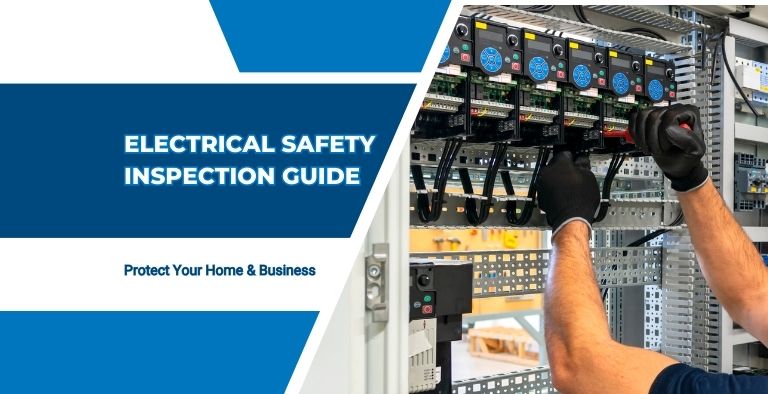
Electrical Safety Inspection Guide: Protect Your Home & Business
Electrical hazards remain a major cause of property damage in homes and commercial buildings. Issues such as faulty wiring, overloaded panels, and missed maintenance often go undetected until safety incidents occur. Electrical safety inspections help identify risks early, protect occupants, and support system reliability. Understanding inspection and testing processes, safety checks, and the role of certified electrical inspectors helps prevent fires, reduce equipment failure, and maintain compliance.
Why Electrical Safety Inspections Are Non Negotiable
Electrical systems operate behind walls, ceilings, and panels, which makes problems easy to ignore until damage occurs. Homes and businesses today rely on more electrical devices than ever, increasing the load on existing systems.
An electrical safety inspection focuses on prevention. It identifies weaknesses in wiring, panels, grounding, and load handling before they turn into hazards. Regular home electrical inspection and testing reduce the chances of fire, shock, power failure, and costly downtime.
For both residential and commercial properties, inspections act as a safety checkpoint rather than a reactive repair step.
What Is an Electrical Safety Inspection
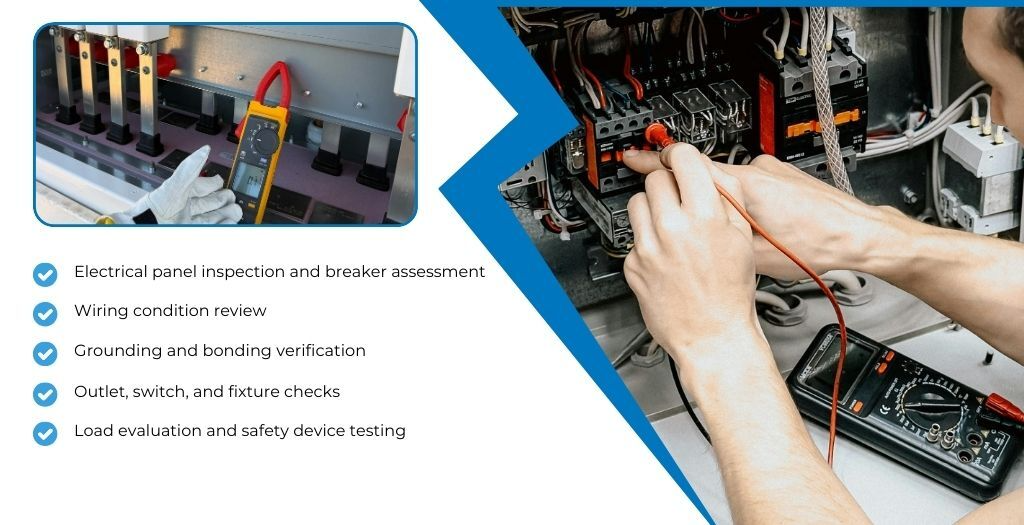
An electrical safety inspection is a structured evaluation of an electrical system’s condition, performance, and compliance. It applies to homes, offices, retail spaces, warehouses, and industrial facilities.
A standard inspection includes:
- Electrical panel inspection and breaker assessment
- Wiring condition review
- Grounding and bonding verification
- Outlet, switch, and fixture checks
- Load evaluation and safety device testing
When conducted as part of a commercial electrical inspection, the process also considers higher load demands, equipment connections, and operational continuity.
Who Should Perform Electrical Safety Inspections
While basic visual checks can be done internally, full inspections should be handled by qualified professionals. A private electrical inspector provides independent evaluation, while a state certified electrical inspector ensures alignment with local regulations and safety codes.
Certified inspectors bring testing tools, experience, and documentation practices that go beyond surface level checks. Their reports support insurance, compliance, and long term maintenance planning.
Key Areas Covered During Electrical Safety Inspection

1. Electrical Panel Inspection
The electrical panel manages how power is distributed throughout the property. An electrical panel inspection checks for overheating, corrosion, loose connections, outdated breakers, and proper labeling.
In both homes and businesses, overloaded panels are a common safety concern uncovered during electrical inspection and testing.
2. Wiring and Cable Integrity
Wiring condition plays a major role in electrical safety. Inspectors examine visible wiring, insulation quality, and connection points.
An electrical safety inspection identifies damaged wiring, improper splices, and unsupported cables that increase fire and shock risks.
3. Grounding and Bonding Systems
Grounding protects people and equipment during electrical faults. Inspections verify that grounding and bonding systems are properly installed and continuous.
A private electrical inspector confirms correct conductor sizing and secure grounding connections to prevent voltage instability and equipment damage.
4. Load Capacity and Circuit Balance
Electrical demand increases over time as devices and equipment are added. Electrical safety checks assess whether circuits and panels can safely handle current usage.
Electrical inspection and testing also identify phase imbalance and overloaded circuits that cause circuit breaker trips and overheating.

5. Outlets, Switches, and Safety Devices
Outlets and switches are tested for grounding, polarity, and secure installation. Inspections confirm proper protection in moisture prone areas and workspaces.
Faulty outlets are one of the most frequent issues identified during electrical safety inspection visits.
6. Lighting Systems and Emergency Power
Lighting affects safety, productivity, and compliance. Inspections verify fixture mounting, wiring condition, and emergency lighting operation.
In commercial settings, commercial electrical inspection also includes exit signage and backup power readiness.
7. Equipment and Appliance Connections
Heavy appliances and commercial equipment draw high electrical loads. Inspectors review dedicated circuits, disconnect switches, and connection stability.
A state certified electrical inspector ensures installations meet safety standards and operational requirements.
8. Surge Protection and Power Quality
Voltage spikes can damage electronics and control systems. Electrical safety inspection includes reviewing surge protection devices and grounding effectiveness.
Homes with smart devices and businesses with servers benefit significantly from this evaluation.

How Often Electrical Safety Inspections Should Be Conducted
Inspection frequency depends on property type, age, and electrical demand. Homes often follow a three to five year inspection cycle, while commercial properties may require more frequent commercial electrical inspection schedules.
Any renovation, equipment upgrade, or electrical incident should trigger an immediate electrical safety inspection.
Benefits of Regular Electrical Safety Inspections
Routine inspections help property owners:
- Reduce fire and shock hazards
- Prevent unexpected power failures
- Extend system lifespan
- Support insurance and compliance needs
- Maintain operational confidence
Regular electrical inspection and testing shift safety from reactive to proactive.

Conclusion
Electrical safety should never be assumed. A structured electrical safety inspection provides clarity, protection, and accountability for both homes and businesses. From electrical panel inspection to grounding verification and load evaluation, each step reduces risk and strengthens system reliability.
Whether part of a residential review or a full commercial electrical inspection, consistent electrical inspection and testing protect people, property, and operations. Working with a private electrical inspector or state certified electrical inspector ensures inspections are accurate, documented, and aligned with safety expectations.
FAQs
1. What is an electrical safety inspection
An electrical safety inspection evaluates the condition and safety of an electrical system. It includes panels, wiring, grounding, outlets, and safety devices. The inspection identifies hazards and reliability concerns. A report outlines findings and recommendations.
2. How is electrical inspection and testing performed
Electrical inspection and testing involve visual review and performance checks. Inspectors use tools to measure voltage, load, and heat buildup. This approach reveals hidden issues. It goes beyond surface level observations.
3. Why is electrical panel inspection important
The panel controls power distribution across the property. An electrical panel inspection identifies overheating, loose breakers, and overload risks. These issues often cause fires or outages. Regular inspection maintains stability.
4. Who should conduct an electrical safety inspection
A qualified private electrical inspector or state certified electrical inspector should handle full inspections. Certified professionals ensure accuracy and compliance. Their reports support insurance and safety documentation.
5. How often should homes and businesses be inspected
Homes typically require inspections every three to five years. Businesses may need more frequent commercial electrical inspection schedules based on usage. Renovations or system upgrades require immediate inspection. Consistency is key.
6. What issues are commonly found during inspections
Common findings include overloaded panels, damaged wiring, missing grounding, and faulty outlets. These problems increase fire and shock risks. Early detection reduces repair costs. Inspections highlight priority concerns.
7. Can electrical safety inspections prevent power failures
Yes. Inspections identify weaknesses that lead to outages. Addressing issues early improves system reliability. Regular electrical inspection and testing reduce unexpected disruptions.
8. Are electrical safety inspections mandatory
Requirements vary by location and property type. Many commercial properties require periodic inspections. Even when not mandatory, inspections are strongly recommended. They protect people, assets, and long term operations.